We Have a New Chick! Welcome Asahi 旭

Last Thursday, we — The HNS White Tern Observation Team — caught a glimpse of The Egg!
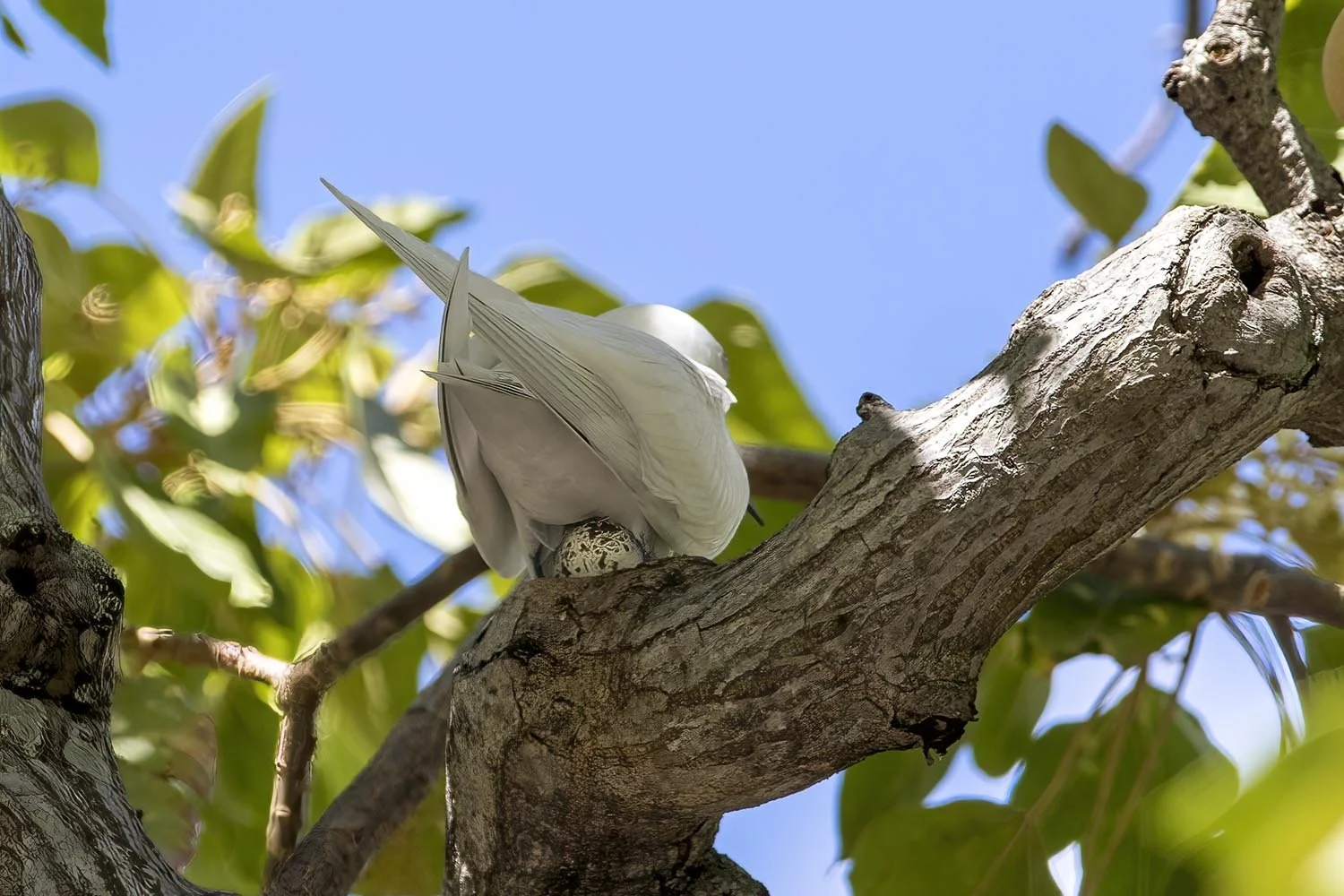


Based on how long the parent birds have been sitting in that one location, we knew a new chick would be with us soon.

Then today:


An eggshell!

The hatching attracted a lot of attention, from another white tern pair as well as other bird species.


Mum (or dad — who can tell?) looked on, unruffled.


Then, at day’s end, we caught sight of grey fluff!

Her name is Asahi (旭, “morning sun”).

Mahalo Ms. Sakiko for choosing such a lovely name!
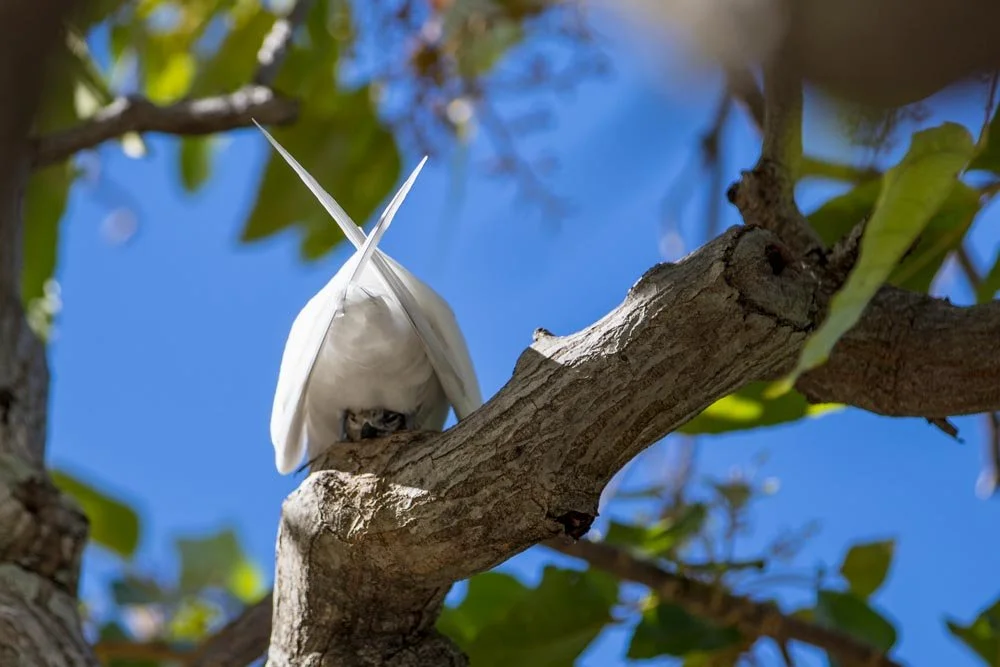


Mum (or dad’s) busy already keeping little Asahi 旭 safe!


It won’t be long before both parents are flying off to catch appropriately-sized fish for Asahi 旭 and delivering them fresh!

White tern chicks just love sashimi!

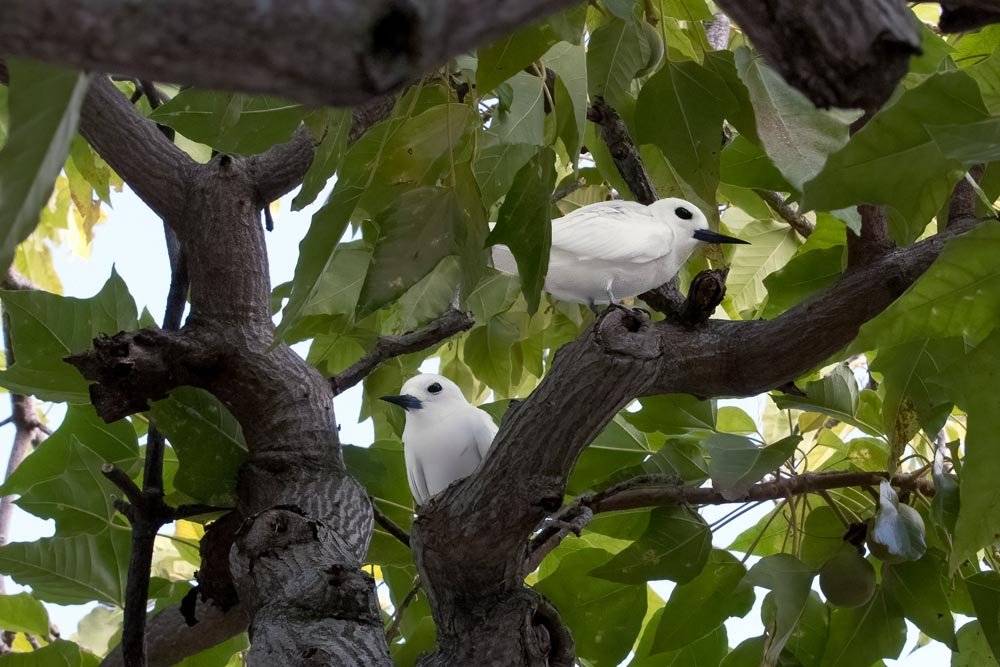
So, when at the HNS main gate, look up!

Often.


Note: Years ago now Ms. Sakiko took on the onerous task of naming HNS’s white tern chicks. Left up to students, chicks were invariably named Fluffy or Puffball, with those who “lost out” on the naming feeling mightily aggrieved. (“You can call her Fluffy but I’m going to call her PUFFBALL!”) Happily, HNS students have accepted the “Ms. Sakiko Names the Chicks” tradition and delight in new chicks, no ruffled student feathers!



A Farewell to Tsuki 月 — Part 4 of 4

05.12.22 - 05.31.22


And this is all she wrote. Tsuki has flown her birth tree and favorite sunbathing trees!

Bye bye Tsuki 月!

06.02.22 — A white tern flew over the green during the HNS graduation. Without a doubt she was wishing the graduates “Happy flying!”


05.12.22


White Terns belong to a seabird group known as “tuna birds”… The name comes from the bird’s foraging technique. When hunting, tuna, dolphinfish (mahimahi), other predatory fish and dolphins drive small fish and squid to the water’s surface, making them available to seabirds hunting above.
—Susan Scott, Hawaiʻi’s White Tern


05.20.22


One charming trait of White Terns is their ability to hold fish crosswise in their beaks and still catch more.
—Susan Scott, Hawaiʻi’s White Tern


05.26.22


Often, White Terns leave their trees at sunrise and come home at sunset, but sometimes parents make two or more fishing trips in one day.
—Susan Scott, Hawaiʻi’s White Tern


05.27.22


Neither kukui trees not mahogany trees are common in Honolulu, yet terns seek them out, probably because those trees offer prime egg-balancing opportunities.
—Susan Scott, Hawaiʻi’s White Tern


Males and females share sitting equally, usually staying 24 to 48 hours. Shift lengths vary according to couple, however, with some changing after six hours and other brooding as long as 72 hours.
—Susan Scott, Hawaiʻi’s White Tern


05.31.22


The mottled tan chick, with brown or black streaks on its head, hatches in 35 to 36 days on average.
—Susan Scott, Hawaiʻi’s White Tern


A Farewell to Tsuki 月 — Part 3 of 4

04.27.22 - 05.11.22


We shall miss Tsuki 月!

Of all the white-tern chicks we’ve had at HNS, Tsuki 月 made the most eye contact with her many admirers and was the most curious about the two-leggeds looking up at her.

She was also chockablock full of personality, some of which was captured in photos.

Enjoy a few more photographs plus quotations from Susan Scott’s Hawaiʻi’s White Tern published by UH Press.


04.27.22


Ornithologist George C. Munro speculated that the bird’s original Hawaiian name might have been ʻohu, a word that the Hawaiian Dictionary defines as “mist, fog, vapor, light cloud on a mountain…”
—Susan Scott, Hawaiʻi’s White Tern


Above: Look carefully—both of Tsuki’s parents have fish in their beaks! Of course, Tsuki 月 is nowhere to be found!


According to master Hawaiian navigator Nainano Thompson, president of the Polynesian Voyaging Society, “the manu-o-Kū go about 120 miles out”… in their search for fish and squid.
—Susan Scott, Hawaiʻi’s White Tern


In 1961, the first White Terns breeding on Oʻahu were noted when an avid birder photographed an adult sitting on an egg in a Kiwi tree near Koko Head. Since then, the White Tern population has steadily increased in Honolulu.
—Susan Scott, Hawaiʻi’s White Tern


The White Tern is the only conspicuous native bird breeding in the trees of Honoluluʻs parks, yards, and city streets.
—Susan Scott, Hawaiʻi’s White Tern


05.08.22 - 05.11.22


For reasons unknown, pairs prefer (so far) the south side of [O’ahu], from Liu Valley to Sand Island, even though the tall trees the birds favor grow throughout O’ahu… White Terns are abundant in the Northwest Hawaiian Islands…
—Susan Scott, Hawaiʻi’s White Tern


Just before egg laying, both parents lose feathers on their bellies, creating bare skin patches that help transfer the adults’ body heat to the egg, and later to the newly-hatched chick.
—Susan Scott, Hawaiʻi’s White Tern


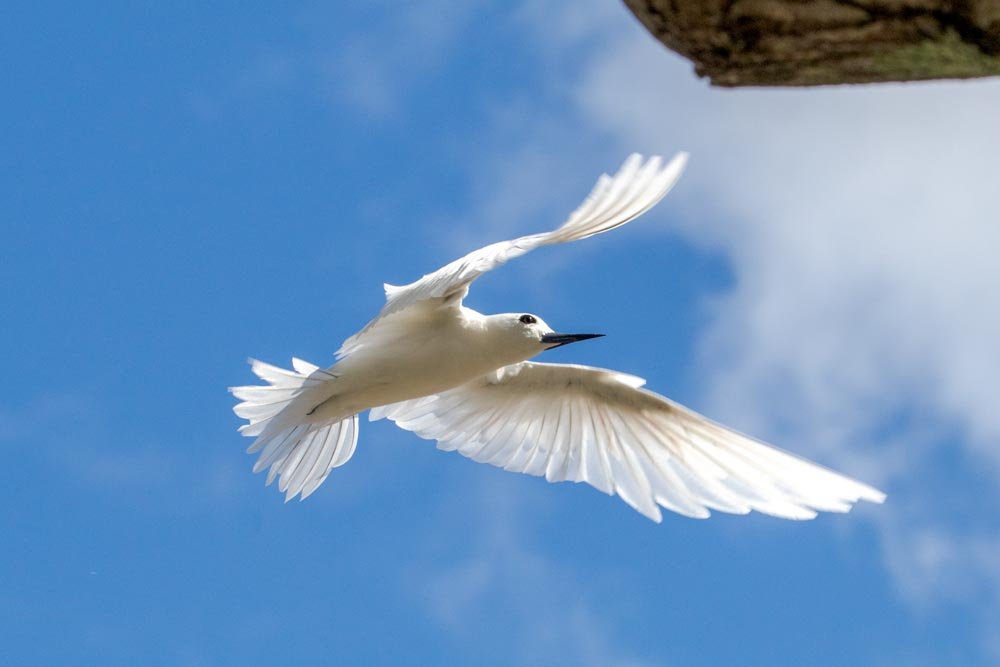
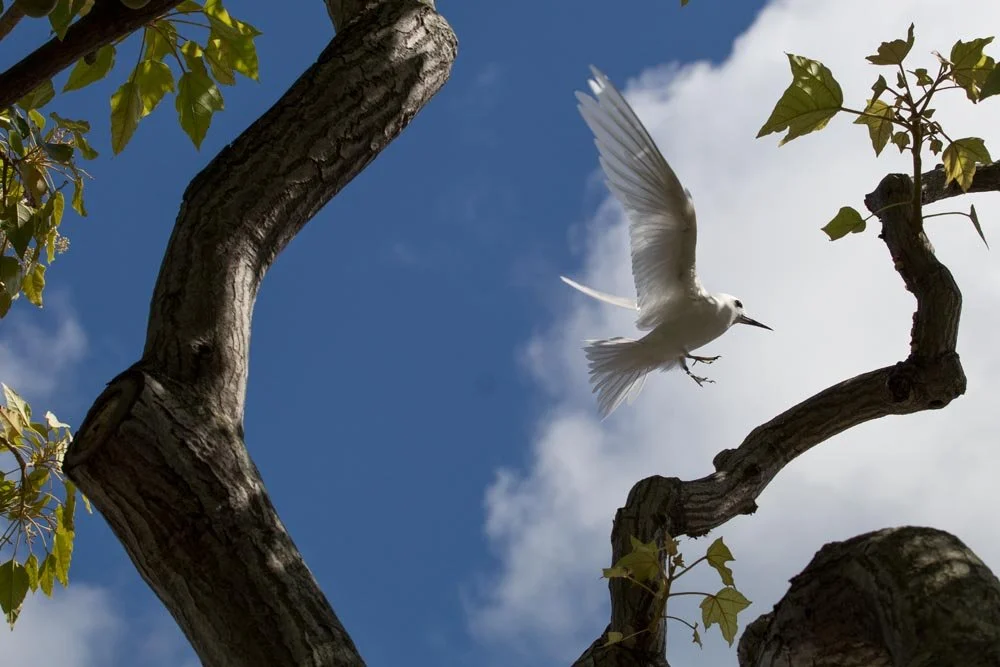
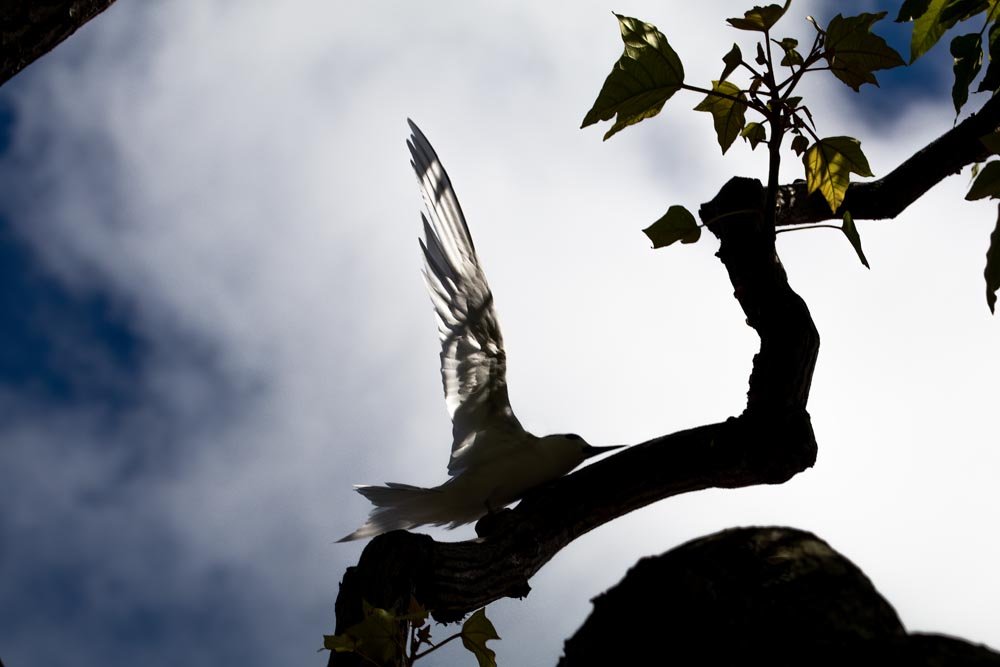
It’s easy to identify a White Tern’s graceful, nearly floating flight… The fluttering flight of White Terns is distinct and, once you know it, unmistakable.
—Susan Scott, Hawaiʻi’s White Tern


White Terns usually live 16 to 18 years, but there are exceptions. On O’ahu, the oldest known White Tern is 37 years old.
—Susan Scott, Hawaiʻi’s White Tern