
How to Train to Hold
Your Breath Longer Safely


• Read •
How to Train to Hold
Your Breath Longer Safely
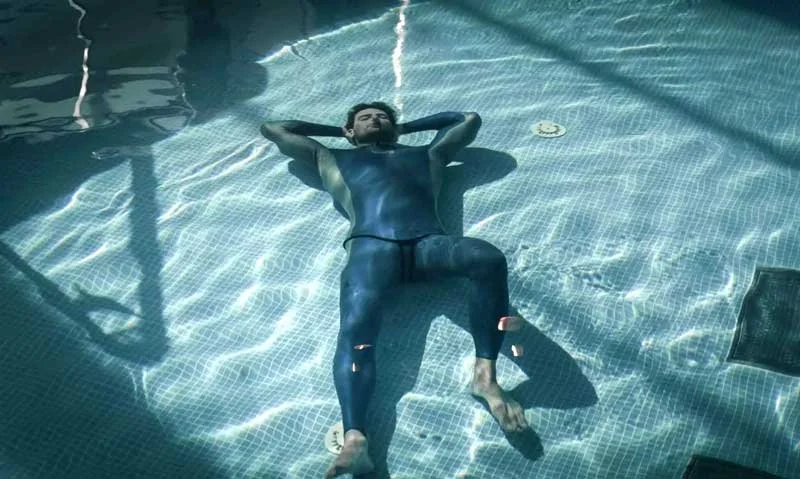
Holding your breath for long periods of time is not something to be done every day, but it could be an important skill in an emergency.
Most people can hold their breath for somewhere between 30 seconds and up to 2 minutes.
Why try holding your breath longer?
There’s not necessarily an immediate, everyday benefit (other than a conversational icebreaker). But holding your breath can save your life in certain situations, like if you fall off a boat.
The world record for the longest someone has held their breath without oxygen assistance is 11 minutes and 54 seconds, set by Branko Petrovic in 2014.
Heike Schwerdtner holds the record among females, after she held her breath without oxygen assistance for 9 minutes and 22 seconds.
In March 2021, according to Guinness World Records, Budimir Šobat of Sisak, Croatia, set the bar high at 24 minutes and 37.36 seconds with oxygen assistance.
In June 2025, Vitomir Maričić set a new Guinness World Record for “the longest breath held voluntarily under water” for 29 minutes and 3 seconds, also with oxygen assistance. This is about five minutes longer than Budimir Šobat.
Interestingly, all world records for breath holds are by freedivers, who are essentially professional breath-holders.
They do extensive physical and mental training to hold their breath under water for long periods of time.
Let’s get into what’s happening in your body when you hold your breath, what possible side effects can happen if you don’t do it right, and what benefits you can get out of holding your breath longer.
What happens when you hold your breath • 1
Here’s what happens to your body when you hold your breath. The times are approximate:
0:00 to 0:30. You might feel relaxed as you close your eyes and tune out the world around you.
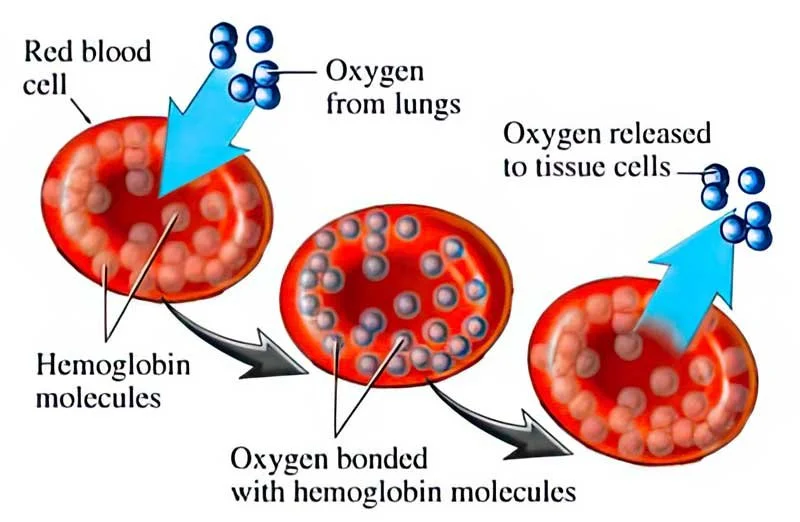
0:30 to 2:00. You’ll start to feel uncomfortable pain in your lungs. The most common misconception about holding your breath is that you’re running out of air — you’re not. Learning to slow your breathing and increase intake during inhalation is part of this. But holding your breath is difficult and dangerous because carbon dioxide (CO₂) is building up in your blood from not exhaling.
2:00 to 3:00. Your stomach starts to rapidly convulse and contract. This is because your diaphragm is trying to force you to take a breath.

3:00 to 5:00. You’ll begin to feel lightheaded. As CO₂ builds to higher and higher levels, it pushes the oxygen out of your bloodstream and reduces the amount of oxygenated blood traveling to your brain.
5:00 to 6:00. Your body will start to shake as your muscles begin to uncontrollably contract. This is when holding your breath can become dangerous.
6:00 and longer. You’ll black out. Your brain badly needs oxygen, so it knocks you unconscious so your automatic breathing mechanisms will kick back in. If you’re underwater, you’ll probably inhale water into your lungs, which is life threatening.
What happens when you hold your breath • 2
When you hold your breath (voluntary apnea) on land for 60 to 90 seconds, your body undergoes a series of rapid, coordinated physiological shifts.
Contrary to popular belief, the primary driver of the "urge to breathe" during this window is not a lack of oxygen, but the accumulation of carbon dioxide.
The Chemical Shift: Hypercapnia and Acidosis
As soon as you stop breathing, your cells continue to metabolize oxygen and produce carbon dioxide. Since you aren't exhaling, carbon dioxide builds up in the blood (hypercapnia).
The Neurological Response: The "Breakpoint"
The brain monitors chemical changes via chemoreceptors.
Central Chemoreceptors: Located in the medulla oblongata, these detect changes in the cerebrospinal fluid.
Peripheral Chemoreceptors: Located in the carotid and aortic bodies, these monitor oxygen and carbon dioxi
Physiological Breakpoint
Around the 45-to-60-second mark, you reach the Physiological Breakpoint.
This is when the chemical signals become so strong that the brainstem begins sending rhythmic, involuntary signals to the diaphragm to contract, even though your airway is closed.
This is often called the "struggle phase."
The "Diving Response" on Land
Even without water immersion, the human body exhibits a mild version of the Mammalian Diving Reflex to conserve oxygen for the brain and heart.
Bradycardia: Your heart rate typically slows by 10–25%.
Peripheral Vasoconstriction: Blood vessels in your limbs and skin constrict. This "shunts" oxygenated blood away from non-essential muscles and toward the brain.
Blood Pressure Rise: Because of the vasoconstriction, your systolic and diastolic blood pressure will rise significantly during the final 30 seconds of the hold.19
Mechanical Factors: The Role of Lung Volume
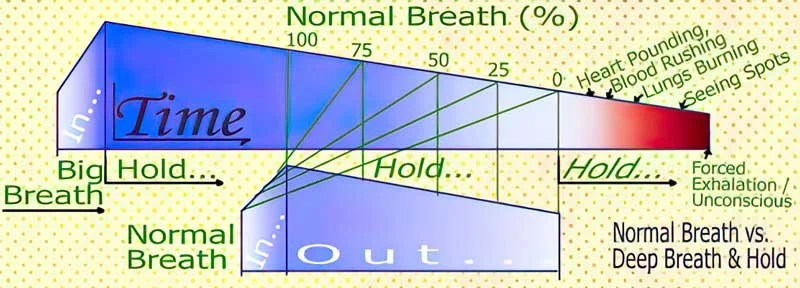
How long you can hold your breath is heavily influenced by how much air you started with.
Holding breath benefits
Holding your breath has useful, potentially lifesaving benefits, including:
improving breathing
improves lung function
possible regeneration of new tissue in the brain to preserve brain function
increasing resistance to bacterial infections
learning how to relax

How to hold your breath longer underwater
If you’re interested in holding your breath longer, be sure to go slowly. Use common sense: Stop and breathe normally if you’re feeling dizzy or have any of the symptoms of oxygen deprivation.
Here’s a step-by-step guide to train yourself how to hold your breath longer:
Learn how to take a deep, full breath. This involves your belly moving up and down rather than your shoulders and chest. A full deep inhalation usually takes about 20 seconds before you exhale.
Do exercises to increase your lung capacity.
Hold your breath for 20 seconds and then rest by breathing normally for 60 seconds, then repeat that hold for another minute.
Hold your breath for 20 seconds, breath normally for 1 minute, and then increase how long you hold your breath by 5 seconds between each 1-minute rest.
Stay still! Moving uses oxygen in your blood, so staying still when you hold your breath preserves the oxygen you’re holding in. You can also try to slow your heart rate using vagal maneuvers.

Takeaway
Holding your breath isn’t just a pool party trick. It can save your life in certain situations and may have other physiological benefits.
If you’d like to learn how to hold your breath longer, don’t rush into it.
It can be harmful or deadly if not done with safety in mind.
Take your time, and try different techniques to see what works for you.

► COMPREHENSION QUESTIONS
— please answer with complete sentences
How long can most people hold their breath for?
Why are world records “with oxygen assistance”—breathing pure oxygen before holding the breath—longer then the word records “without oxygen assistance”—breathing air that is about 20% oxygen and 80% nitrogen?
Why are freedivers so good at holding their breath for long periods of time?
When you hold your breath for between 30 seconds (0:30) and 2 minutes (2:00), what happens in your body?
Between 2 (2:00) and 3 (3:00) minutes your stomach may start to rapidly convulse and contract. Why?
Why does carbon dioxide builds up in the blood (hypercapnia)?
What is the Physiological Breakpoint (also known as “the struggle phase”)?
What is the Diving Response (on land)?
If person A can hold his/her breath a lot longer than person B, what’s the most likely reason?
List at least three benefits to learning to hold your breath longer?
A+ BONUS: This article lists several ways a person might learn to hold his/her breath longer.
Which ideas might we make use of as we develop our method for increasing the length of time a person can hold his/her breath?