
WEST MAUI VOLCANO
Please rewatch this video again.
There is a lot of information shared in about 5 mintues.


• Read •
WEST MAUI VOLCANO
SPECTACULAR
While the still-active Haleakala volcano on the eastern half of the island of Maui is quite spectacular, I personally think that its older western counterpart is equally fascinating.
Across the West Maui volcano, you can find some of the deepest canyons in all of Hawaii. These canyons are up to 4,400 feet deep.
You can also see the remains of an intact body of solidified magma and the remains of lava domes.
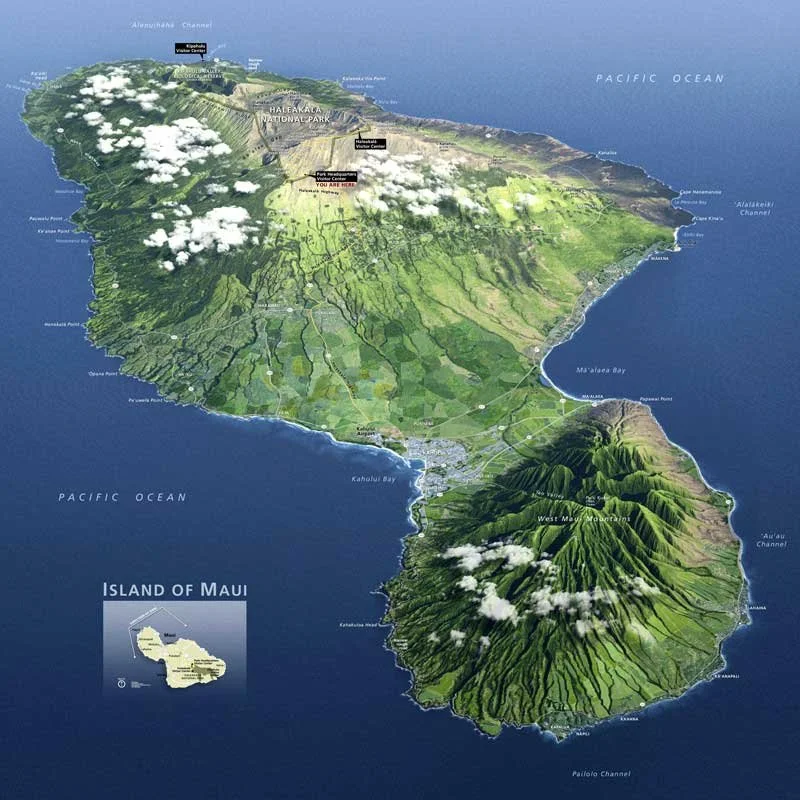
How did this volcano form?
How did it grow to become the tallest volcano in all of Hawaiʻi?
It rose to 13,000 feet (3,962 meters) in height!
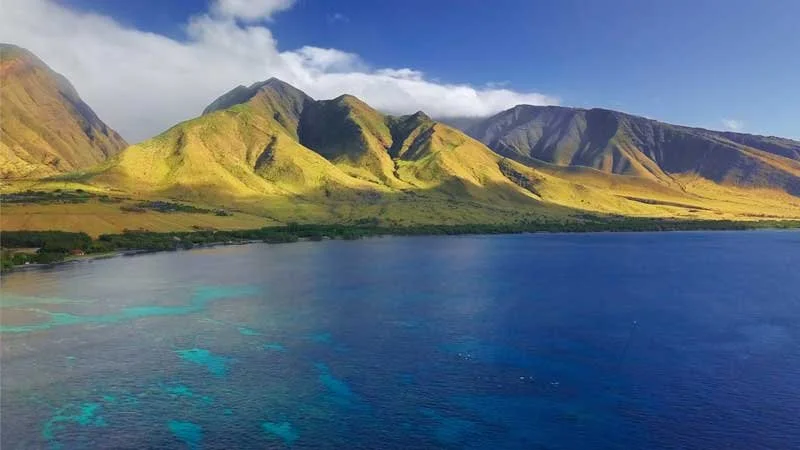
The Hawaiian Hotspot
The answer — like all other volcanoes in the Hawaiian Island Chain — is the Hawaiian Hotspot in the underlying mantle.
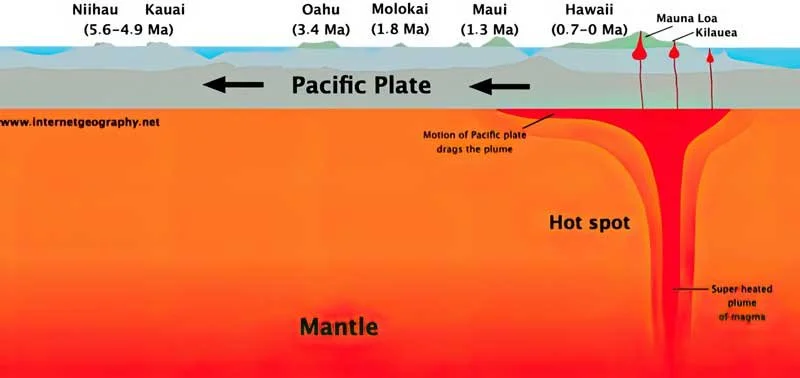
• Figure 1
It is called a hotspot because it represents an area of the mantle which is about 200 degrees Celsius hotter than the surrounding mantle material.
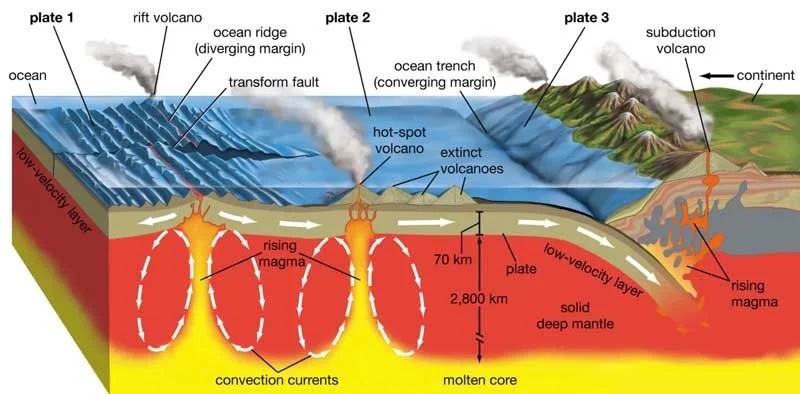
• Figure 2
Just like hot air rising, this hotter material rises into the oceanic crust, creating many volcanoes and volcanic eruptions.
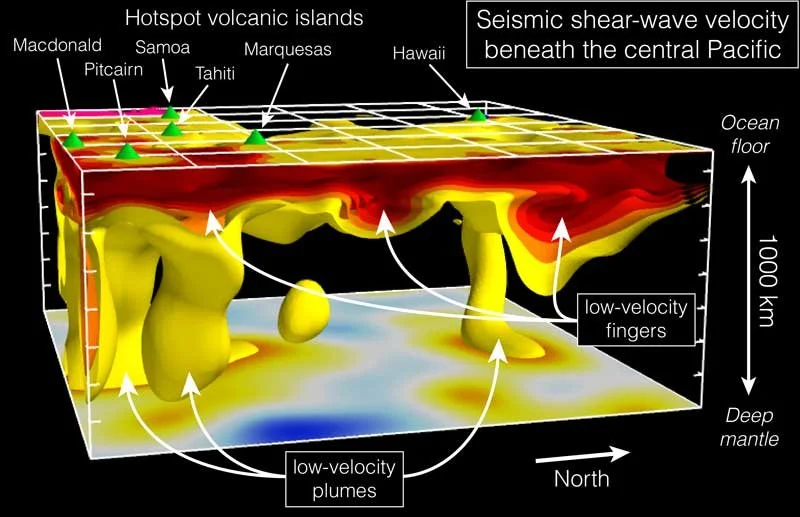
The Hawaiian Hotspot does not move.
Instead, the Pacific Plate moves to the west-northwest.
This creates the chain of volcanoes that makes up the Hawaiian islands.
The Submarine Stage
“Sub” means under.
“Marine” means water.
Submarine means under water.
About two million years ago the West Maui volcano became one of the most active volcanoes in Hawaiʻi.
It began as a submarine volcano on the ocean floor.
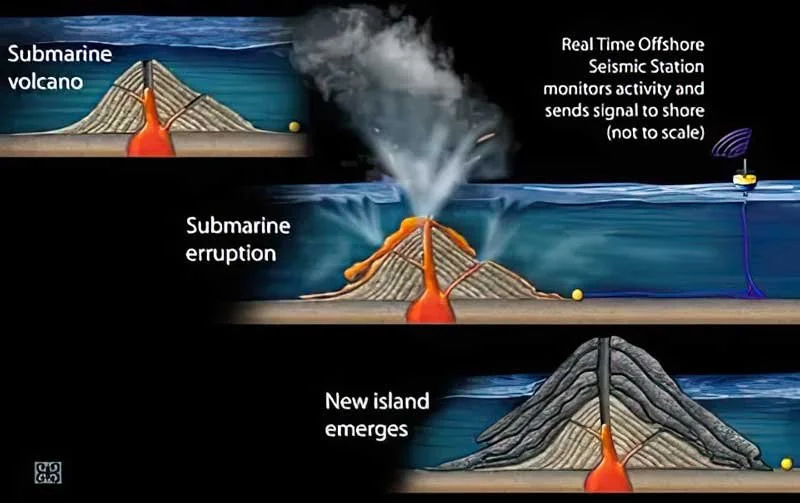
Layer after layer of pillow basalt caused the volcano to rise from the ocean floor.
• Watch an underwater volcano! 2 minutes
Volcanic eruptions became progressively more common over time.
These eruptions built a huge underwater shield volcano. In time, it approached the ocean surface.
In the shallow water, a series of explosive eruptions occurred.
These eruptions built a plateau out of ash and lava. From this the island of Maui would grow.
The Shield Stage
Dike (n.): A long, thin body of hardened magma that cuts across other rock layers.
Due to a zone of weakness in the crust, magma dikes rose (see the diagram below). These created rift zones.
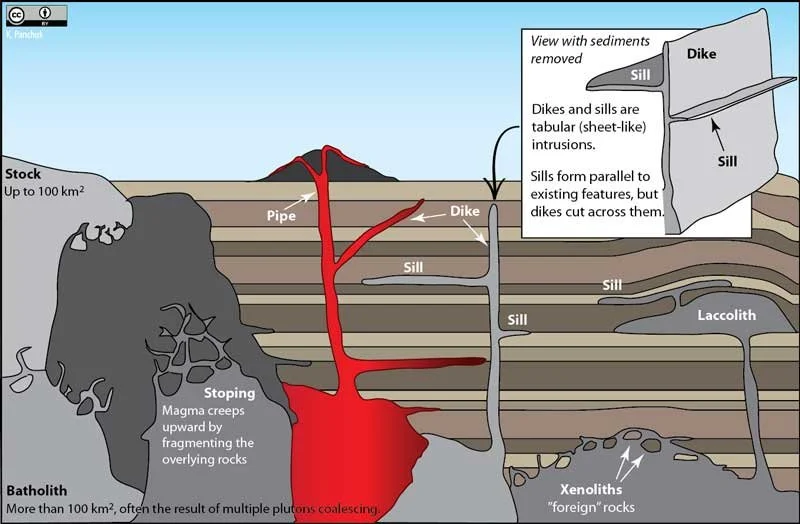
• Notice the difference between dikes and sills.
Rift zones are areas where the volcano is rifting or splitting apart. The rock in a rift zone has many cracks and is relatively weak.
In these rift zones, many flank eruptions occurred.
From these flank eruptions large volumes of low-viscosity lava ran. They created an oblong volcano.
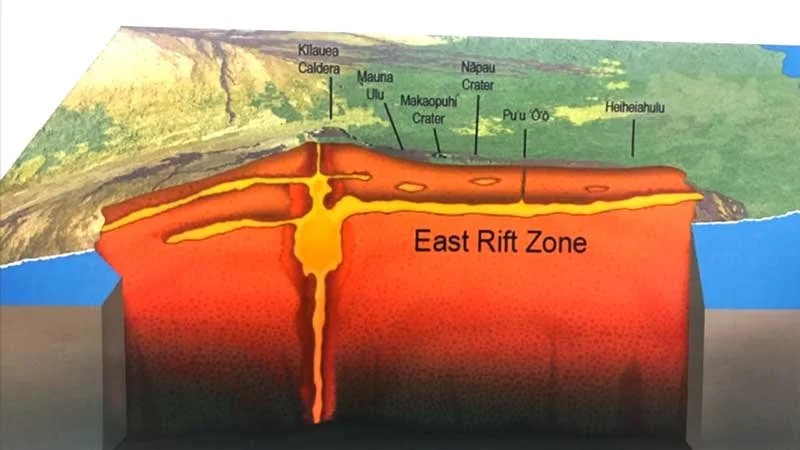
• Rift zone on Big Islandʻs Kilauea volcano
A series of large-volume flank eruptions caused West Maui's summit to collapse into a caldera.
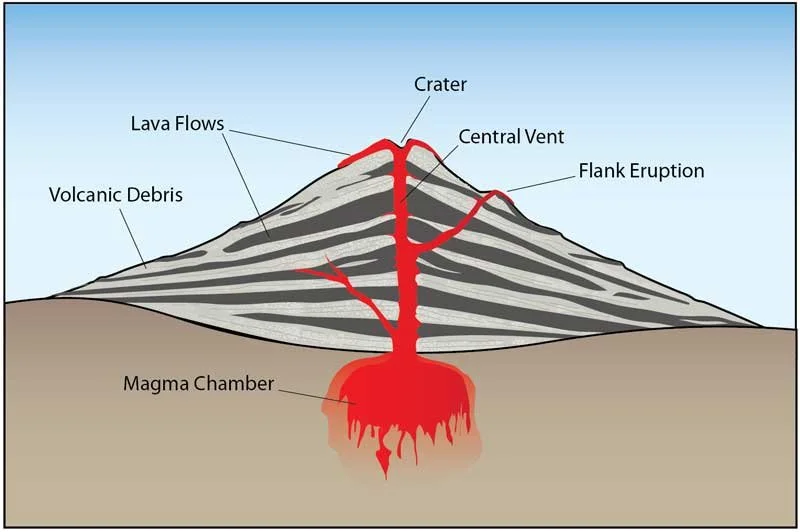
• See FLANK ERUPTION on right hand side
A caldera is a large, typically circular volcanic depression (more than1 km wide) formed by the inward collapse of a volcano into an emptied magma chamber.
This caldera measured 1.95 miles long, 1.95 miles wide and 400 feet deep.
In contrast, a crater is a smaller, often funnel-shaped depression formed by outward explosions or impacts.
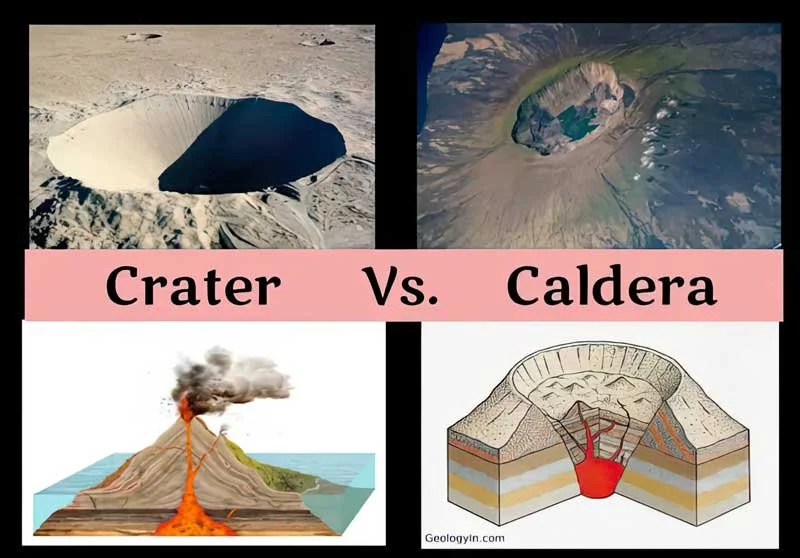
Over time, this volcano reached a height of approximately 13,000 feet about 1.3 millions years ago.
This was due to multiple eruptions every century over hundreds of thousands of years.
The Post-Shield Stage
”Post-” means after.
In time, the volcano entered its post-shield stage.
Look at Stage 3 in the illustration below.
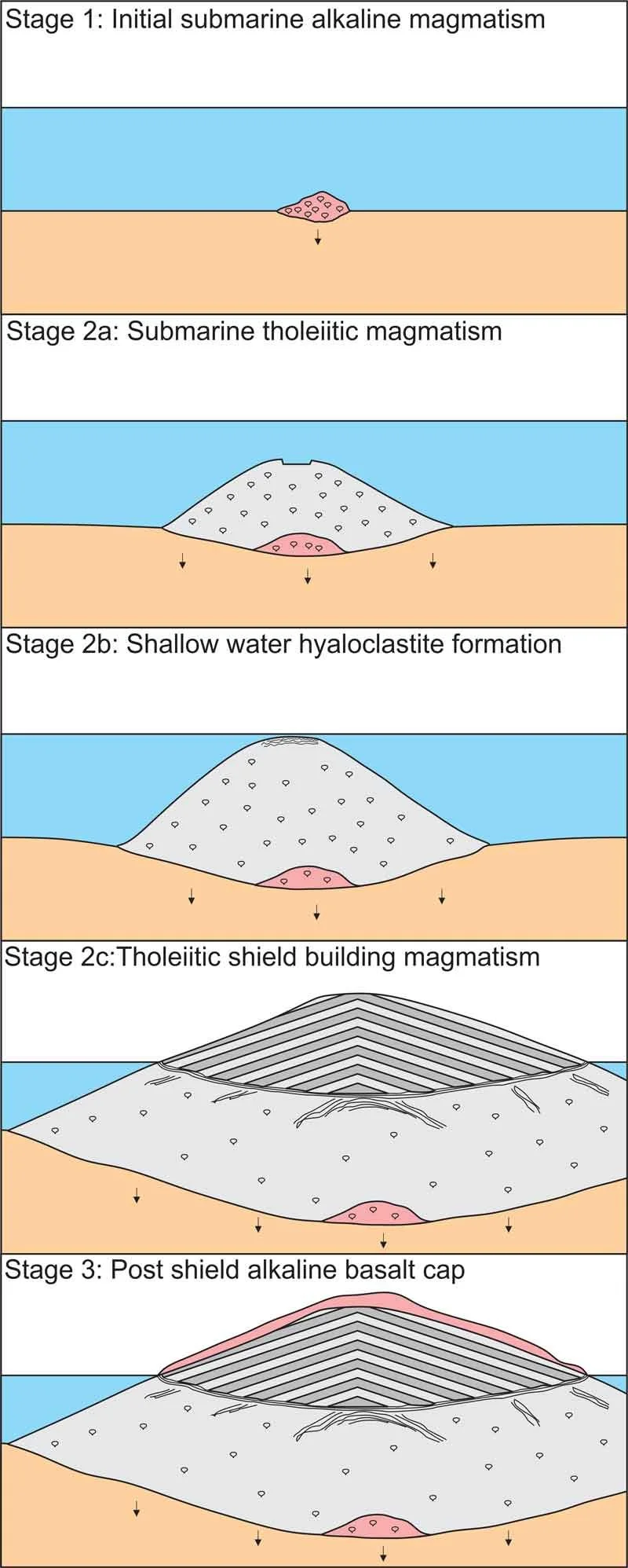
Eruptions became less frequent but more explosive.
These creating more viscous — thick “syrupy” — flows of lava made of both hawaiite and trachyte.
Hawaiite is a volcanic rock that typically erupts during the late stages of volcanic islands formed by hot spots.
Trachyte is volcanic rock formed by the rapid cooling of lava.
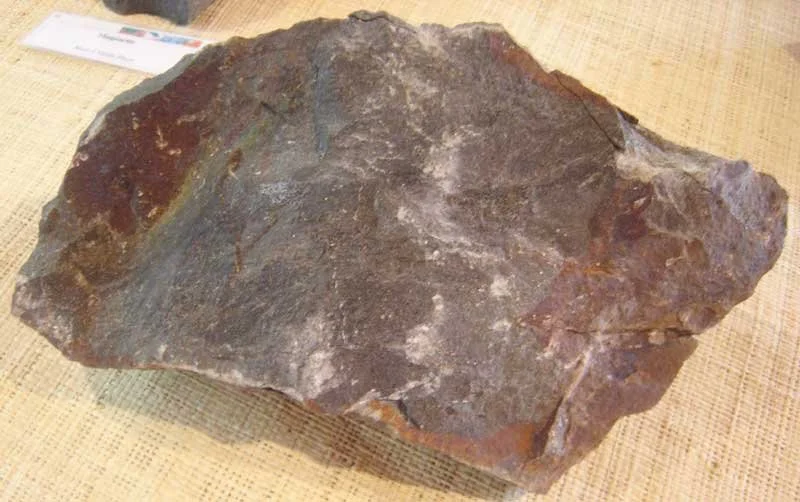
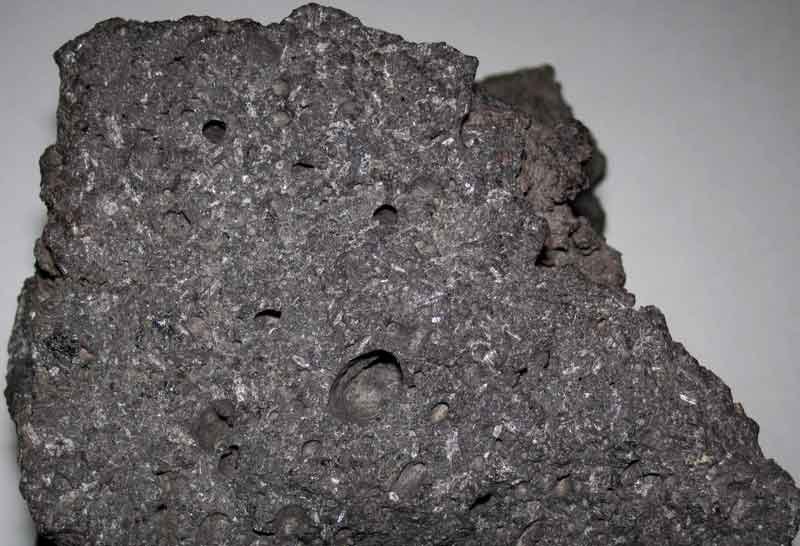
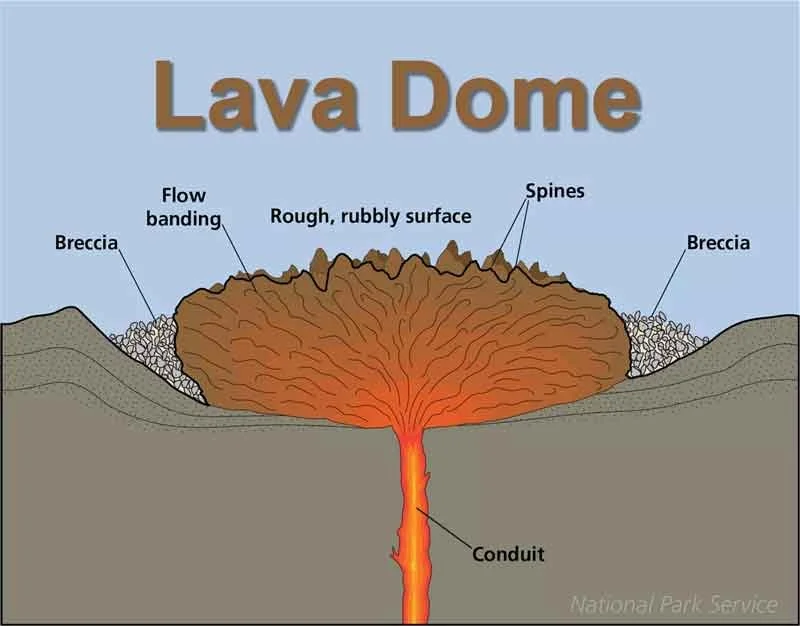
With the West Maui volcano, Trachyte formed incredibly viscous lava domes .
These domes rose to as much as 580 feet above the surrounding landscape.
Domes form from the slow eruption of highly-viscous lava.
This lava is too thick to spread out into a lava flow. Most domes are small and many do not have a crater.
Due to gas being more easily trapped under highly viscous (thick “syrupy”) lava, explosive eruptions occurred.
The post-shield phase lasted for another 100,000 years.
Then there was a pause in volcanic activity.
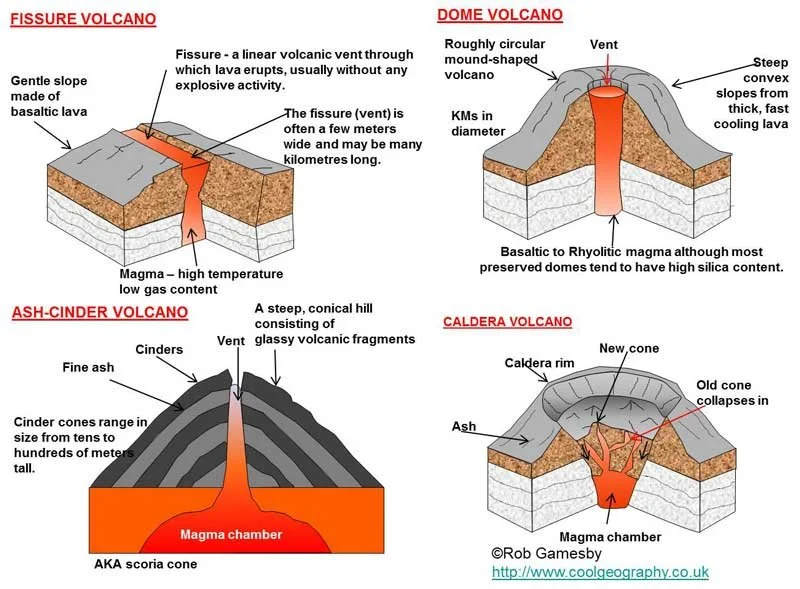
• Dome volcano top right
Erosion & Rejuvenation
“Re-” means again.
“Juvenile” means young.
Re-juvenate means make young again.
Across the next 490,000 years, rainfall expanded existing low points in the terrain, forming deep canyons as large sections of the island eroded away.
Even the summit eroded away.
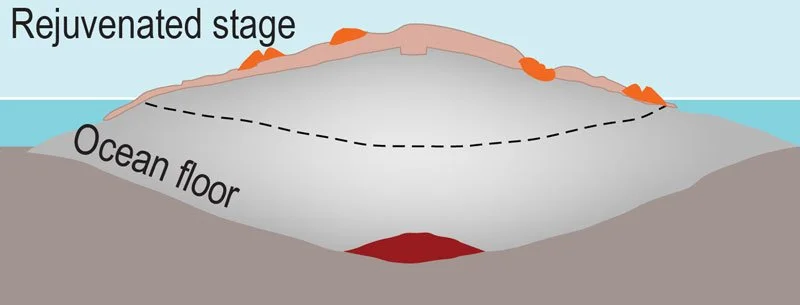
During the rejuvenation stage (see below) much of the West Maui volcano eroded away.
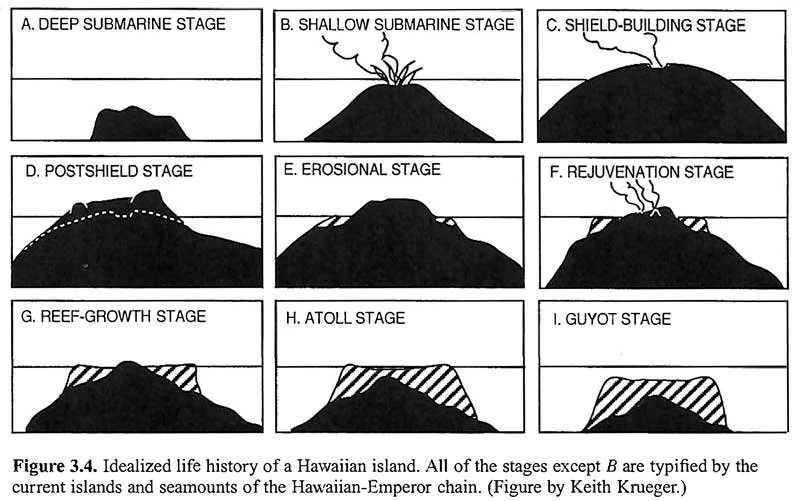
• The rejuvenated stage is F.
Occasional volcanic eruptions formed cinder cones along Maui’s shoreline.
These occurred 610,000 years, 580,000 years, and around 390,000 years ago.
I hope you find the eastern side of Maui as fascinating and spectacular as I do.
Enjoy your trip to ʻIao Valley!

Basalt (n.): A dark, fine-grained volcanic rock.
Caldera (n.): A large bowl-shaped crater formed by the collapse of a volcano's mouth.
Counterpart (n.): Something that has the same function or position as something else.
Density (n.): How closely packed the material inside an object is.
Dike (n.): A long, thin body of hardened magma that cuts across other rock layers.
Effusive (adj.): A type of volcanic eruption where lava flows steadily out onto the ground.
Erosion (n.): The process where wind, water, or ice wear away rocks and soil.
Intrusion (n.): The process of magma forcing its way into existing rock layers.
Mantle (n.): The thick layer of hot, solid rock located between the Earth's crust and its core.
Oblong (adj.): An object that is longer than it is wide.
Plateau (n.): A large, flat area of land that is higher than the surrounding land.
Pyroclastic (adj.): Relating to a fast-moving cloud of hot gas and rock fragments from a volcano.
Rejuvenated (adj.): Having been given new energy or appearing fresh again (in geology, a volcano starting to erupt again after a long pause).
Rift (n.): A long crack or opening in the Earth's surface.
Shield volcano (n.): A broad volcano with gently sloping sides, shaped like a warrior's shield.
Submarine (adj.): Existing or occurring under the surface of the sea.
Subsidence (n.): The gradual caving in or sinking of an area of land.
Trachyte (n.): A type of light-colored volcanic rock that comes from very thick lava.
Viscous (adj.): Having a thick, sticky consistency between a solid and a liquid.

► COMPREHENSION QUESTIONS
— please answer with complete sentences
How deep are some of the canyons in the West Maui mountains?
Look at Figure 1.
What layer of the Earth does the plume of molten magma come from?
Look at Figure 2. Figure 2 has rising magma beginning in a deeper layer.
What is that layer?
Watch the 2 minute video of a submarine volcano.
Describe what you see.
Flank eruptions can occur in rift zones.
What is a flank eruption?
Try to explain why a volcanic caldera is smaller than a volcanic crater.
Hint: look at the definition of caldera in the vocabulary list.
What two types of volcanic rock are found in the post-shield stage?
Name the 5 stages that come before the rejuvenation stage.
Write your answer as a complete sentence.
When did the magmatic intrusions to form cinder cones in four distinct eruptions along Maui’s shoreline?
Hint: three different dates are given in the text.
What does it mean if magma is viscous?
Hint: look at the definition of viscous in the vocabulary list.
ABCD (Above & Beyond the Call of Duty) — the only way to get to 50/50 (A+); you may need the points if you’ve dropped points above.
What the 5 minute video “What Makes Volcanoes Erupt?” (below)
Explain in your own words… what makes volcanoes erupt.
Dr. Kirtland Peterson Cat Peterson Dr. Cat