
ICEBERGS


• Read •
ICEBERGS
Have you ever heard the term "tip of the iceberg"?
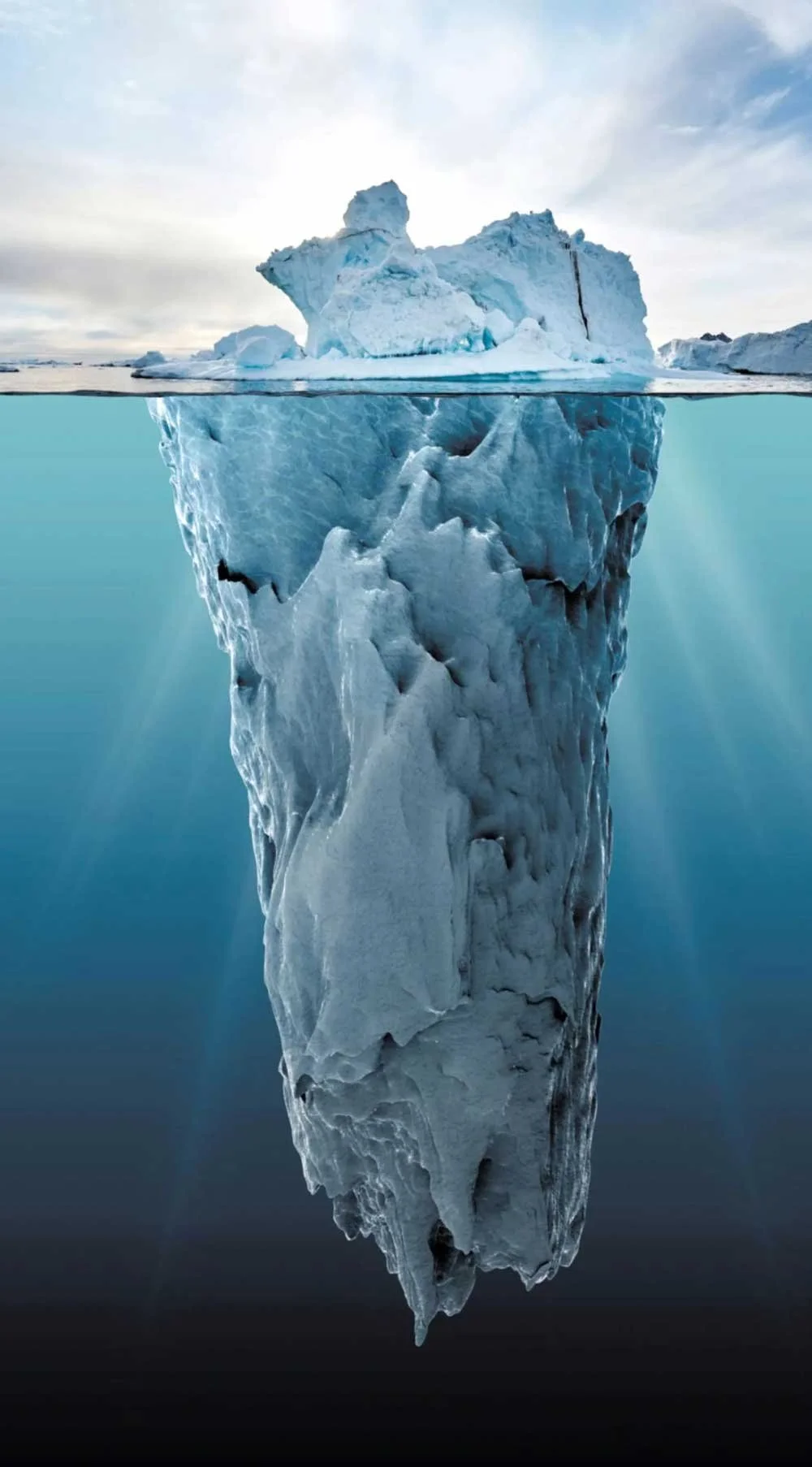
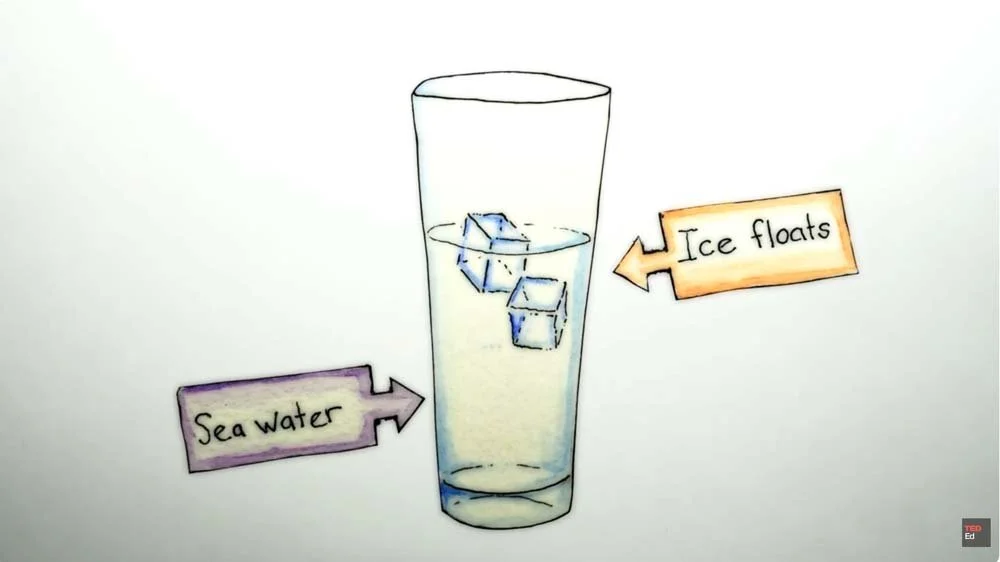
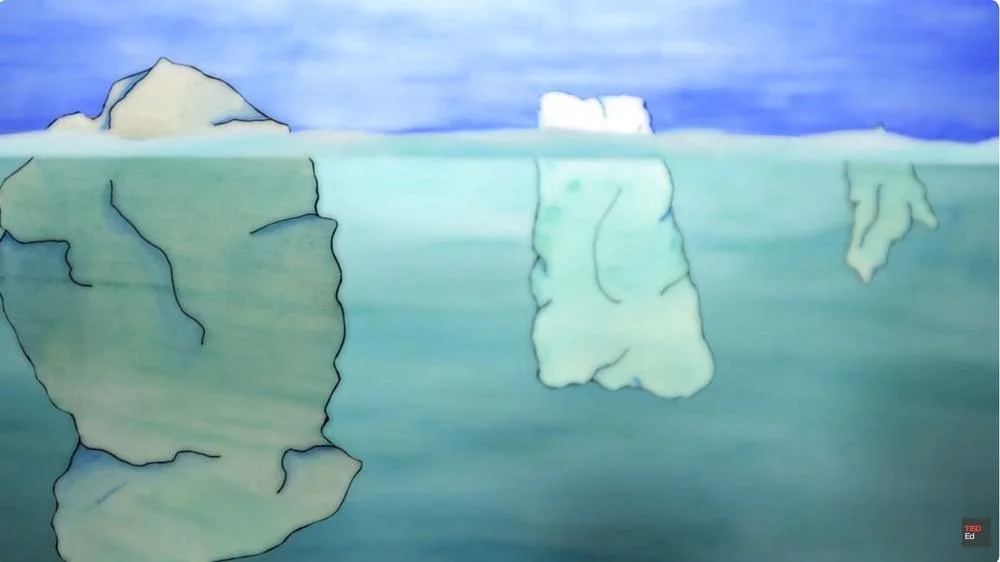
You know that icebergs are mostly underwater, their immense bulk hidden beneath the water. But why don’t they just sink? Why do they float?
Well, the density of pure ice is less than that of sea water.

Immense (adj.): Extremely large, huge, or vast.
Density (n.): A measure of how heavy something is compared to its size (how closely packed its matter is).
Facts About Icebergs
Usually only 1/9 of the volume of an iceberg is above the water.
The shape of the underwater portion is difficult to discern by looking at the above-surface portion.
This has led to the expression, "tip of the iceberg."
Discern (v.): To see, recognize, or notice something clearly.
The life of an iceberg begins many thousands of years before it reaches the ocean.
Unlike sea ice or pack ice, which form when the ocean freezes, glaciers are made of fresh water.
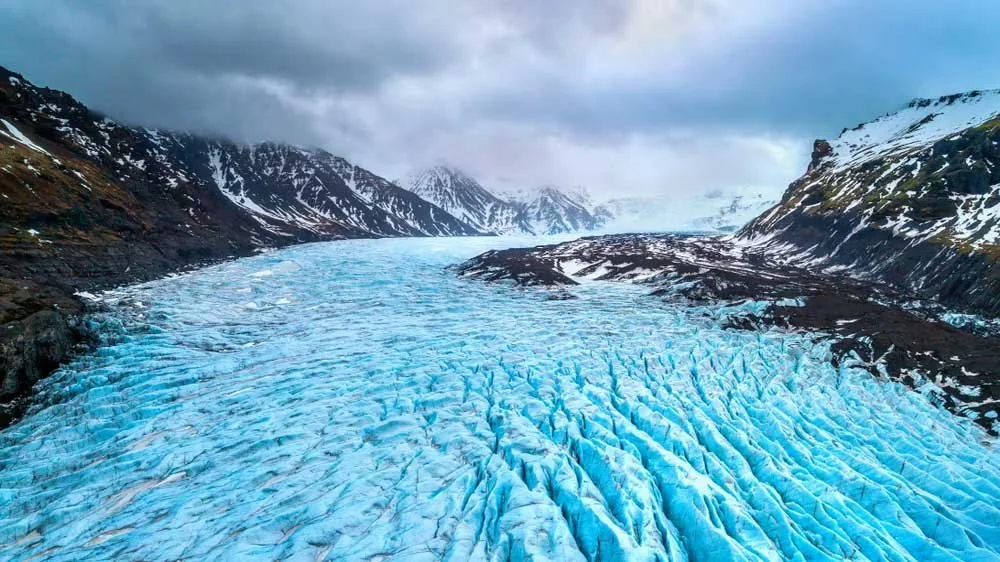
For thousands of years, these glaciers build layer upon layer of ice—constantly compressing, moving, adding snow, compressing, and moving again as they inch along like a frozen river.
Compress (v.): To squeeze, press, or flatten something down into a smaller space.
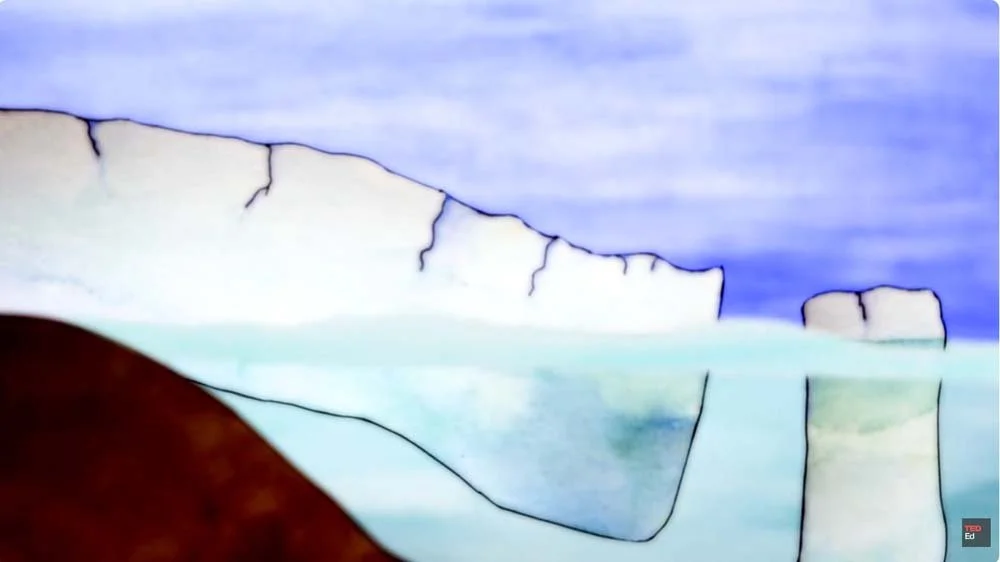
It is the force of gravity that pulls them towards the sea, where a glacier may calve off to become an iceberg or continue to spread out as an ice shelf or an ice tongue.
Calve (v.): To split or break off a large mass of ice from a glacier or ice shelf.
• Watch this 20 second video clip of an glacier calving.
Once an iceberg breaks away from the glacier or ice shelf, it will usually live for three to six years, floating around, carried by the currents and tidal movements of the ocean.
As it floats along, it is battered by waves, melts, and smashes into land and sometimes other icebergs.
Some icebergs are so unstable that they have more dramatic ends, heaving up, collapsing, and sometimes even exploding.
And as they fall apart, many icebergs make all sorts of strange sounds. When a piece of iceberg melts, it makes a fizzing sound called "Bergie Seltzer."

This sound is made when the water-ice interface reaches compressed air bubbles trapped in the ice. As this happens, each bubble bursts, making a popping sound.
Interface (n.): The point or surface where two different things meet or touch.
Six Iceberg Size Classifications
There are six official size classifications for icebergs.
The smallest icebergs are called growlers. They can be up to the size of your car and are very dangerous for ships and boats because usually they sit just at the waterline where they are not easy to spot.
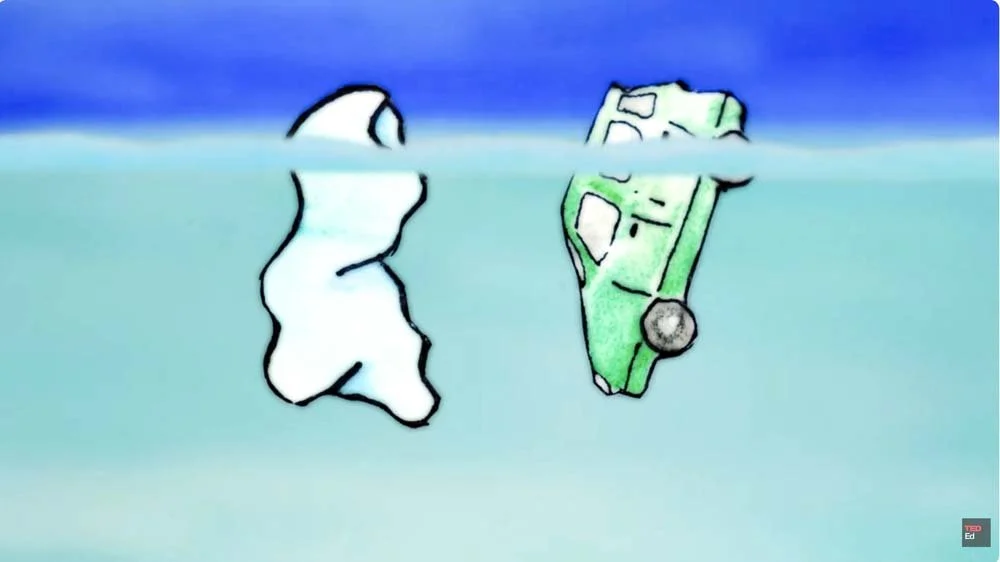
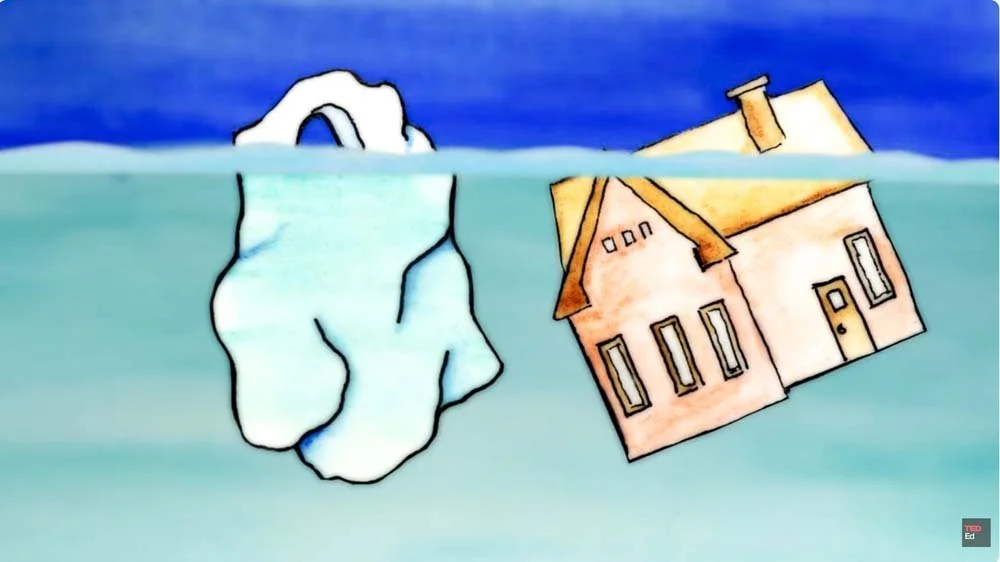
Next are the bergy bits—yes, that is their scientific name—which can be up to the size of your home.
The other four sizes are small, medium, large, and very large.
So just how big is a very large iceberg?
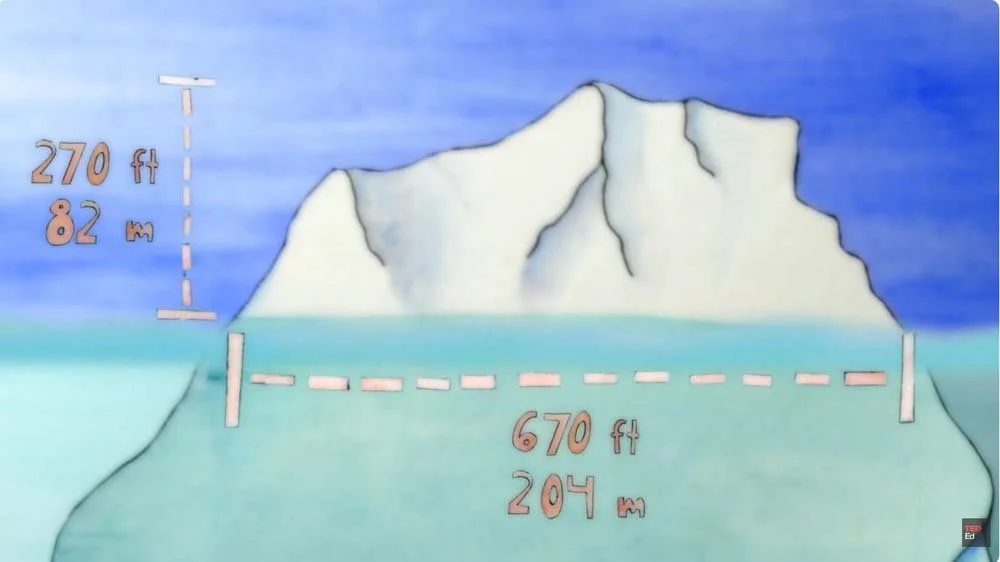
Officially, any iceberg looming larger than 270 feet high above sea level and 670 feet long is considered very large. That's 27 stories of looming, blue ice.
Loom (v.): To appear large and unclear—often in a frightening or threatening way—or to describe an unwelcome event that is close to happening
Blue ice
How do icebergs get that blue color?
When snow on the glacier is compressed over many hundreds of years, the weight of the snow forces the air bubbles out of the ice, creating pure ice with very little air trapped inside.
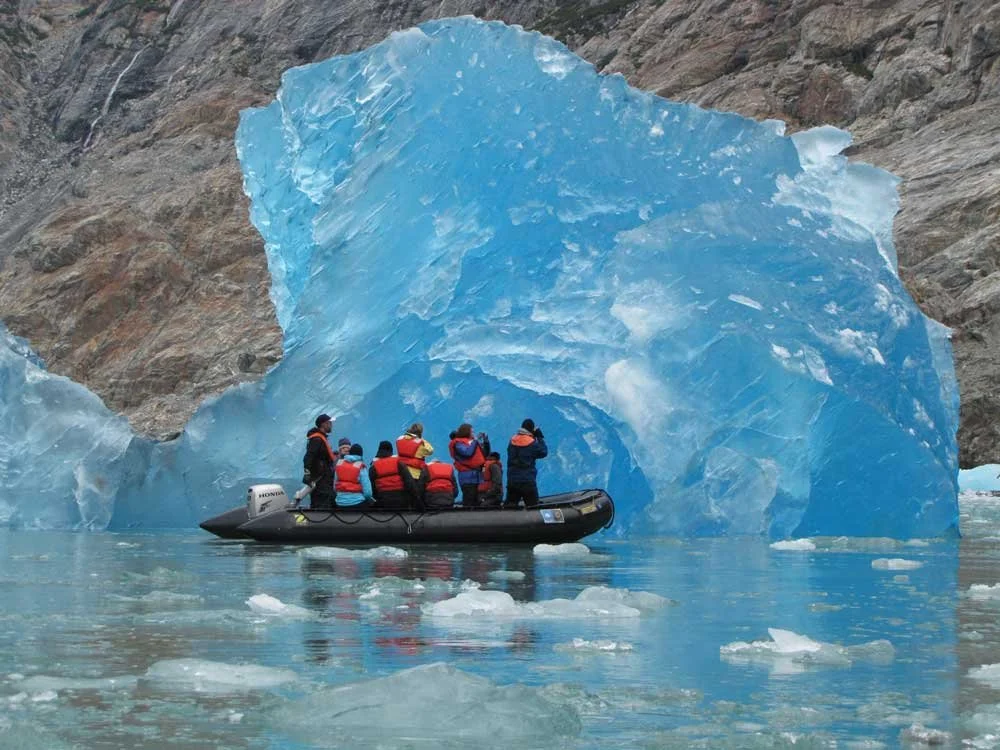
This compression is seen when the glacier calves, creating a blue iceberg.
An iceberg that has not experienced as much compression and has a large amount of air and surface edges reflects light as white.
Ecosystems Around Icebergs
Although they form in far northern or southern areas, icebergs can float thousands of miles.
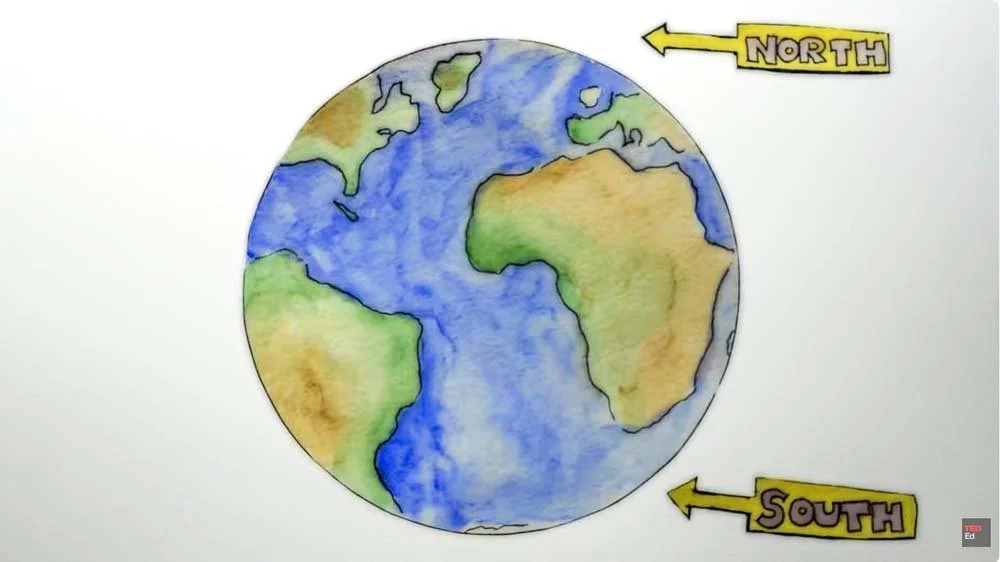
An iceberg from the Arctic floated as far south as Bermuda.
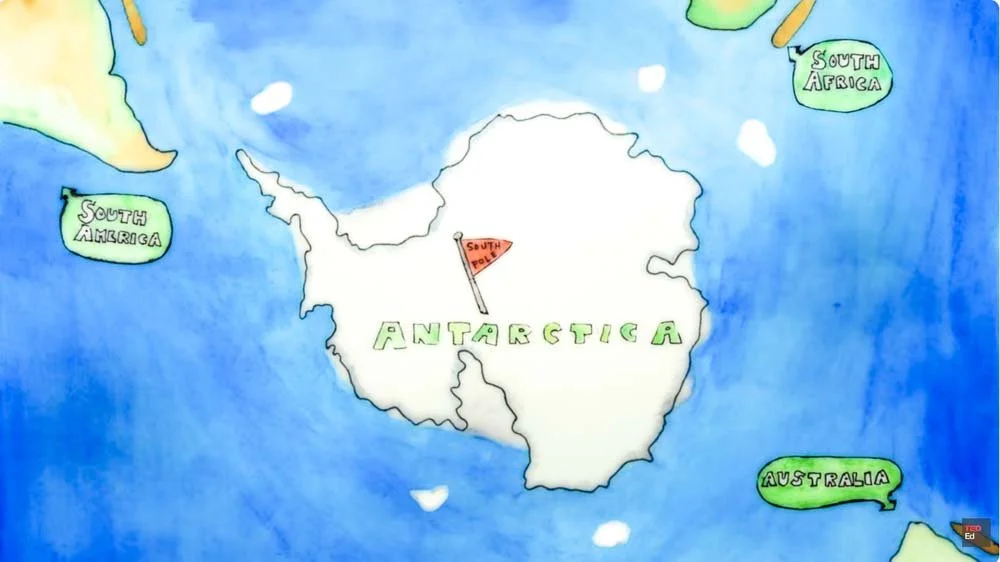
Antarctic icebergs are mostly trapped in the Circumpolar Current, never giving them a chance to float north.
However, they have been known to interrupt shipping lanes between Australia, South America, and South Africa.
Iceberg ecosystems
For all their traveling, many people think that these slabs of ice are barren of life, but these seemingly sterile ice slabs also harbor their own complex ecosystems, and they shape the ecosystems that they pass through.
They become mobile, floating ecosystems.
Barren (adj.): Bare, empty, or unable to support life or plant growth.
Sterile (adj.): Lacking life, organisms, or the ability to produce living things.
Ecosystem (n.): A community of living animals and plants interacting with their non-living environment.
Even in the coldest seas, icebergs are always melting, at least a little bit.
This melting has a major impact on the ocean around an iceberg. The fresh water from the berg creates a pool of fresh water that can extend a nautical mile away from the iceberg.
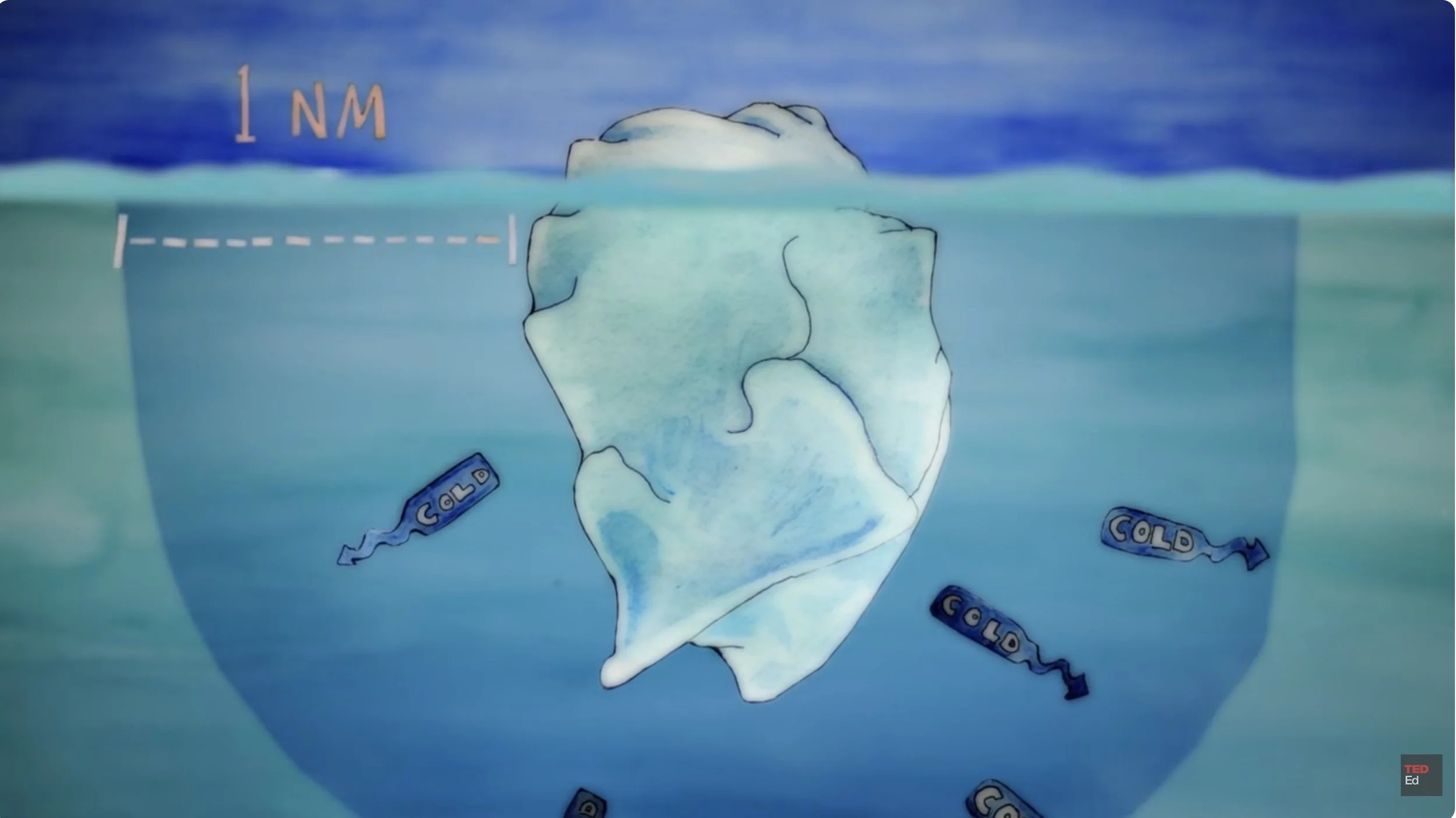
This water is colder than the surrounding sea water, and the temperature variation creates thermal currents in the vicinity of the iceberg.
Nautical (adj.): Relating to ships, sailors, navigation, or travel on the ocean.
1 nautical mile = 1.15 land miles. Nautical miles are used in marine and air navigation.
Thermal (adj.): Related to heat or temperature.
Vicinity (n.): The surrounding area or neighborhood near a specific place.
Life thrives on and around an iceberg.
Young ice fish hide in small ice holes to avoid predators, while a variety of invertebrates, like jellyfish and siphonophores, congregate in the area.
Invertebrate (n.): An animal that does not have a backbone (such as a jellyfish or insect).
Siphonophore (n.): A group of ocean animals made up of tiny connected bodies working together that look like long, floating jellyfish.
Congregate (v.): To gather in a large group or crowd.
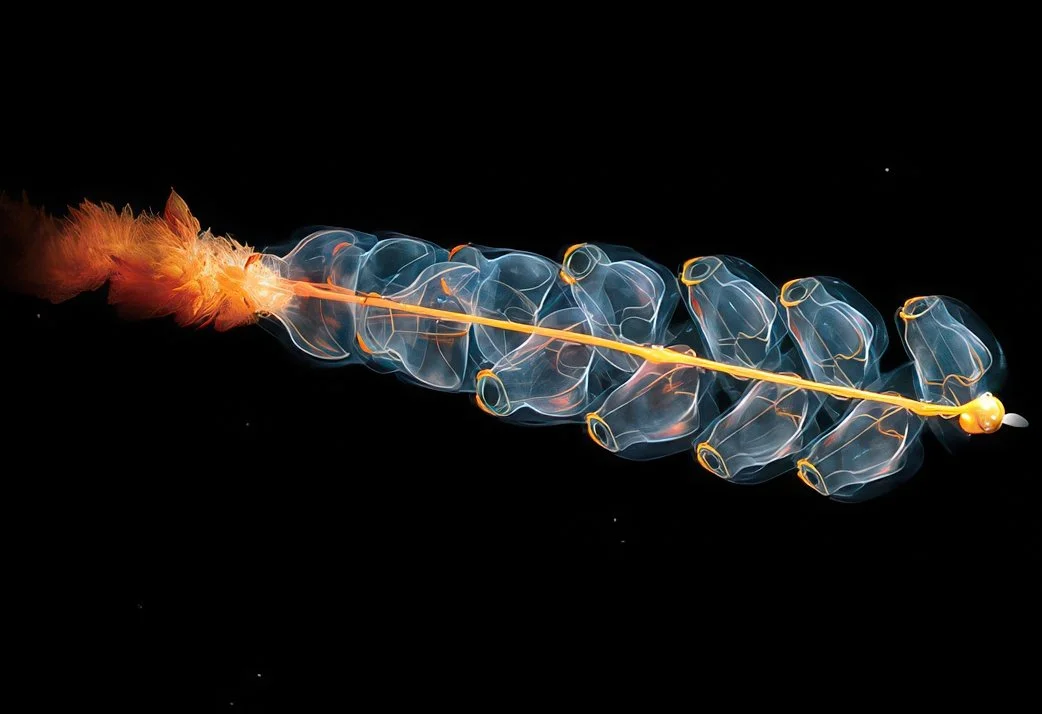
• Siphonophore
Many of them come to feed on krill, tiny shrimp-like creatures.
Snow petrels nest on the icebergs and feed on the sea life nearby. Whales, seals, and penguins seem to like them, too.
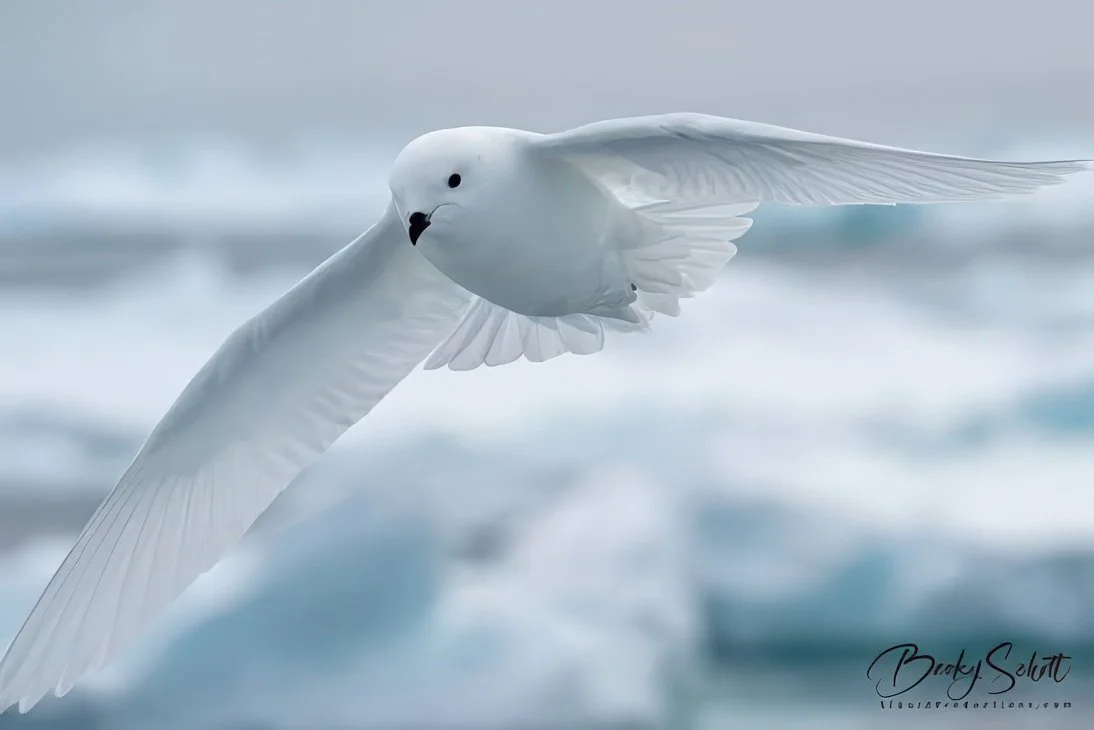
• Snow petrel
And even now that you know all this, we're still at the tip of the iceberg.
There are all sorts of things we don't know about icebergs. Perhaps you'll be the one to see a little deeper.


► WATCH VIDEO
— about 5 minutes
x

► COMPREHENSION QUESTIONS
— please answer with complete sentences
Imagine a balloon and a rock of about the same size.
Explain why the rock is more dense than the balloon.
If 1/9th of an iceberg is visible above the water line, what fraction of the iceberg is below the water line?
Seltzer water is bubbly water.
What is Bergie Seltzer?
What is the difference between a growler and a bergy bit?
You are out at sea and an iceberg looms ahead.
What does that mean?
Why don’t Antarctic icebergs float north?
What does it mean than an iceberg is a barren and sterile ecosystem?
Four nautical miles is how many land miles?
What is a siphonophore?
List at least four animals that live in, on or around icebergs.
ABCD (10 points)
You know that global warming isn’t good for people and other living things.
You hear a climate scientist say, “Oh, global warming is just the tip of the iceberg.”
What does s/he mean by this?
Dr. Kirtland Peterson Cat Peterson Dr. Cat