
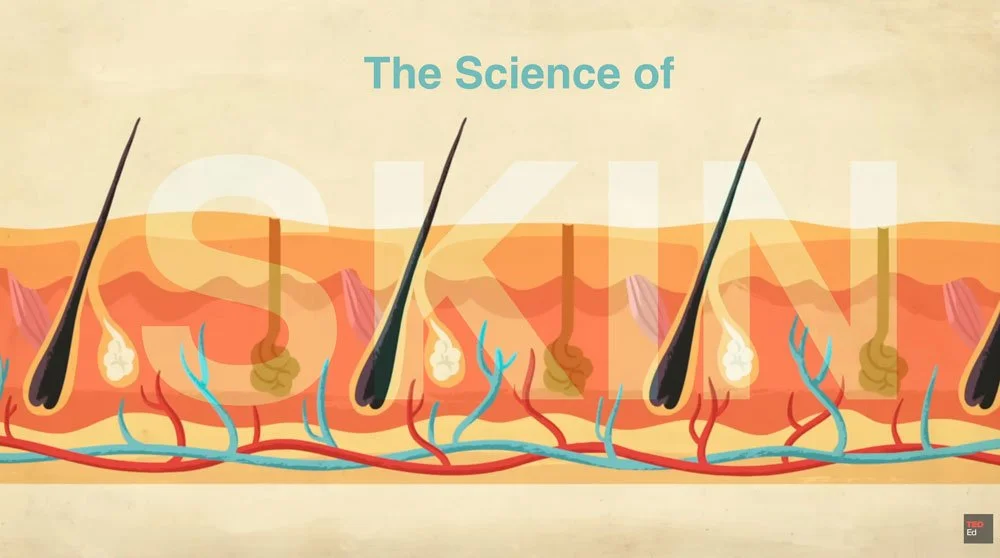
THE SCIENCE OF SKIN


• Read •
THE SCIENCE OF SKIN
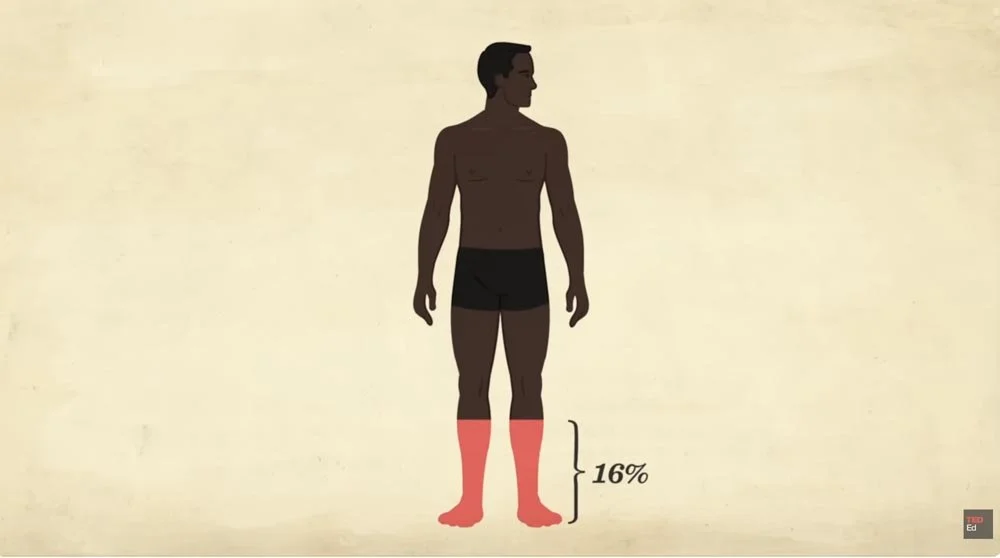
16% of your weight
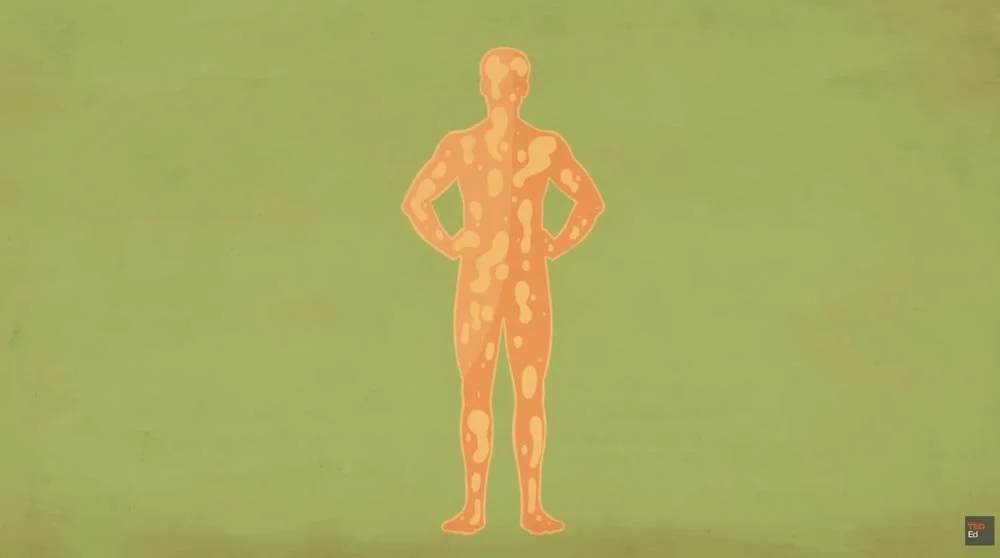
Between you and the rest of the world lies an interface that makes up 16% of your physical weight.

DEFINITION
Interface (n.): A point or surface where two independent systems or spaces meet and interact.
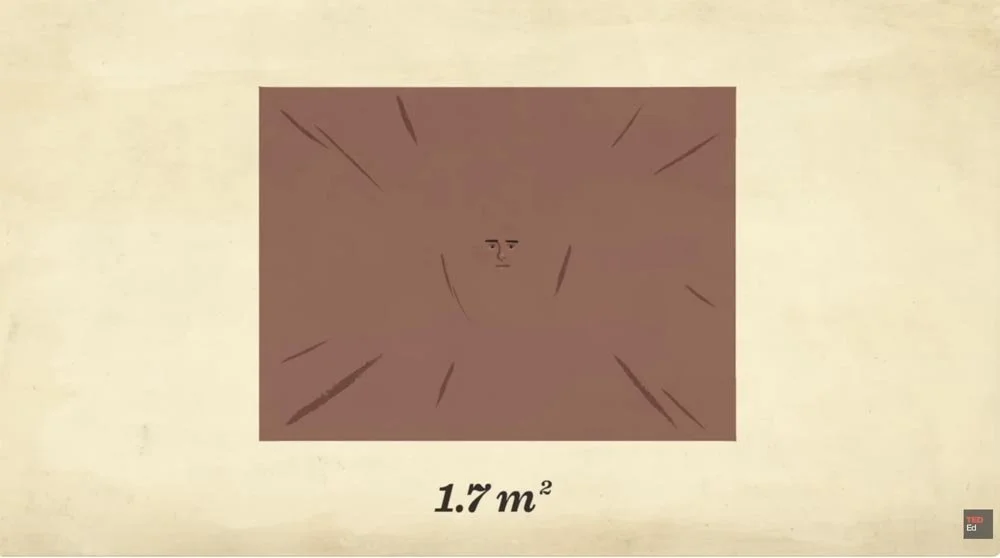
This is your skin, the largest organ in your body: laid out flat, it would cover close to 1.7 square meters of ground.
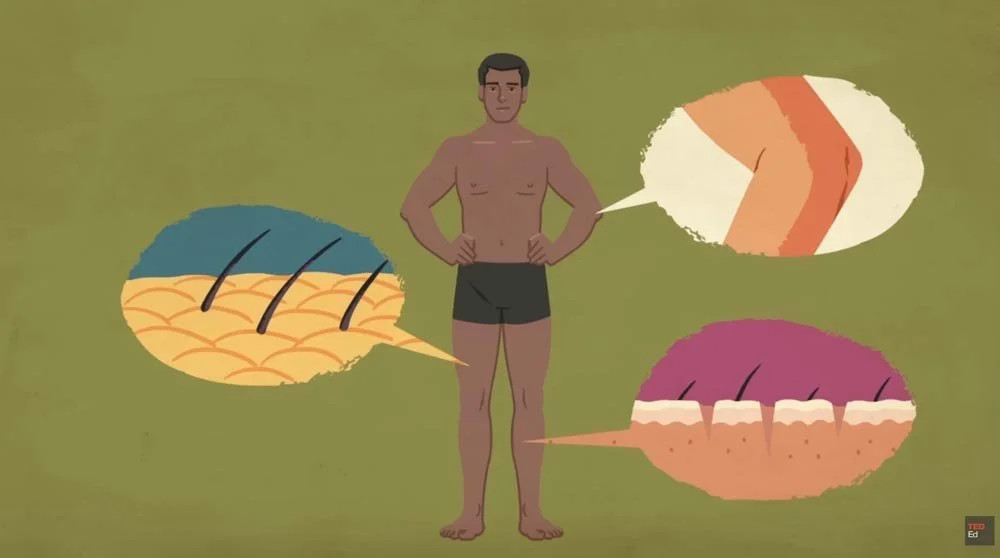
Its purpose may seem obvious—to keep our insides in. But a look beyond the surface reveals that it plays a surprising number of roles in our lives.

• in - te - gu - men - tary
the in-te-gu-men-tary system
Skin is the foundation of the in-te-gu-men-tary system, which also incorporates your hair, nails, and specialized glands and nerves.
DEFINITION
The integumentary system is like the body's outer shield.
It's a group of organs that cover the outside of an animal's body.
This system includes your skin, hair, and nails.
For other animals, it can also include scales, feathers, or hooves.
The word integumentary comes from a Latin word, integumentum, which means 'a covering.’
The integumentary system works as a strong barrier. It helps to protect and keep the body healthy and safe.
Three Layers, Three Functions
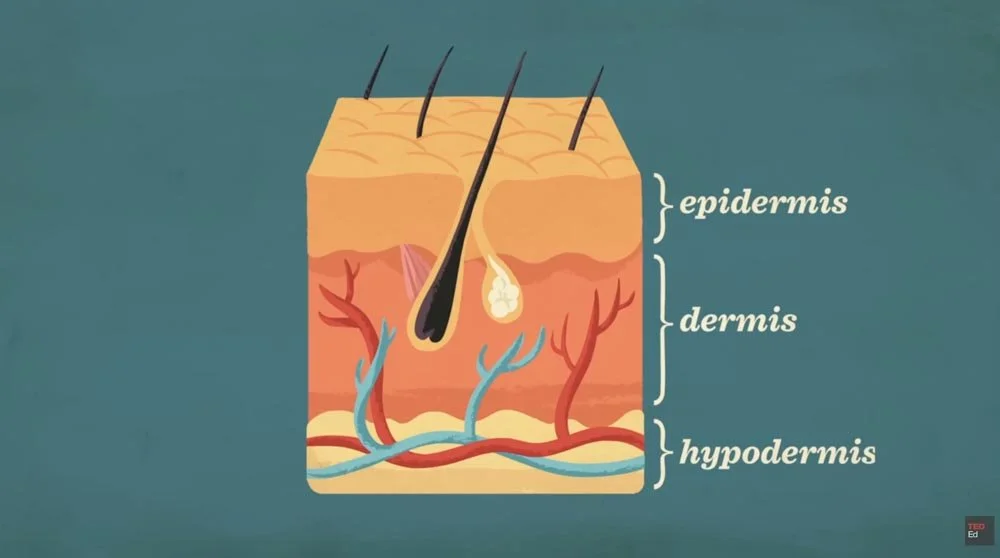
Made up of three layers—the epidermis, dermis, and hypodermis—skin’s thickness varies from 0.5 millimeters at its thinnest and up to four millimeters at its thickest.
DEFINITION
Epidermis (n.): The thin, protective outermost layer of the skin.
Dermis (n.): The thick inner layer of skin located right below the outer layer.
Hypodermis (n.): The innermost layer of the skin that stores fat and energy, pads and protects the body, and attaches skin to the bones and muscles.
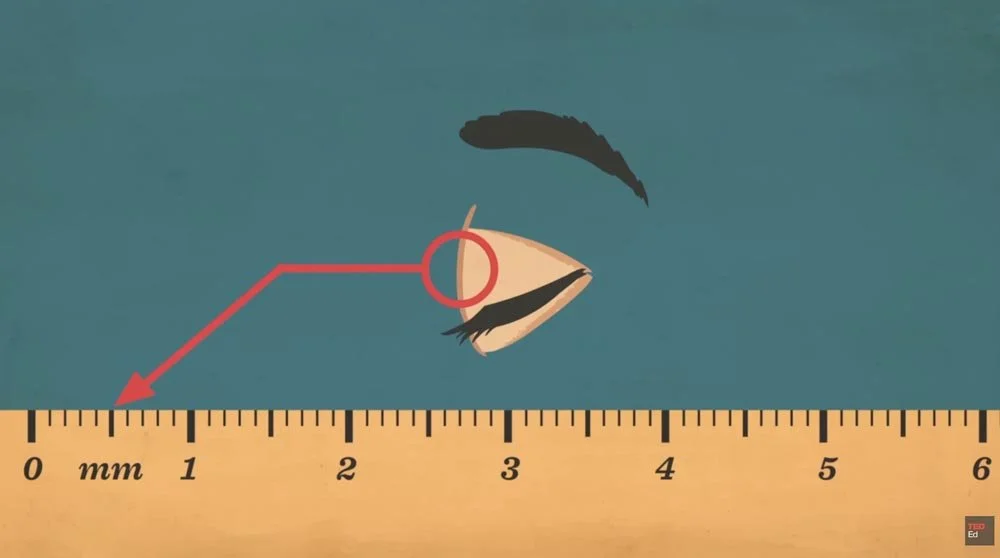
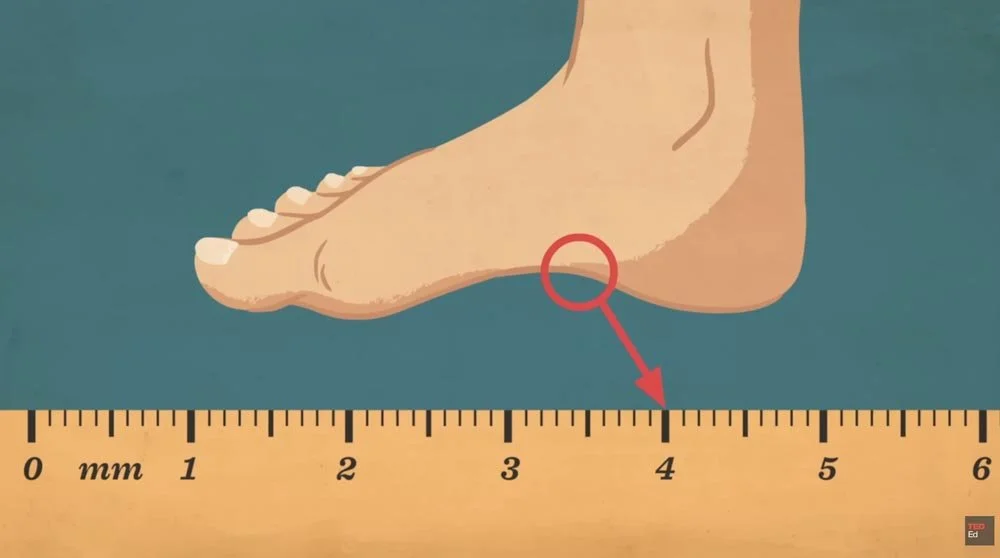
The integumentary system also carries out three key functions: protecting, regulating, and sensing the world beyond its limits.

Each day, the integumentary system’s huge surface processes hundreds, if not thousands, of physical sensations, relying mostly on large, pressure-sensitive skin components called Merkel cells.

DEFINITION
Merkel cells (n.): Specialized oval-shaped sensory cells in the skin that function as touch receptors, helping to perceive gentle pressure, shapes, and textures.
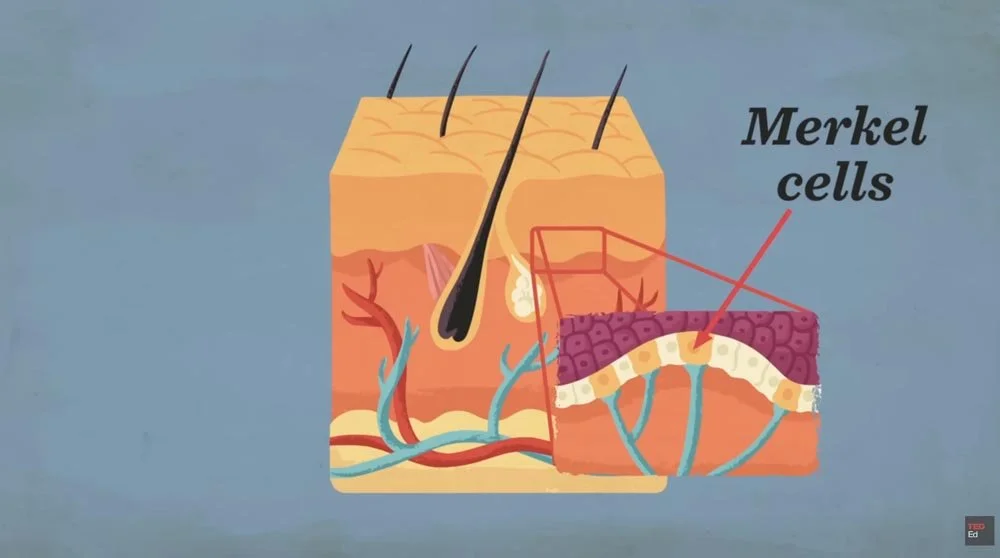
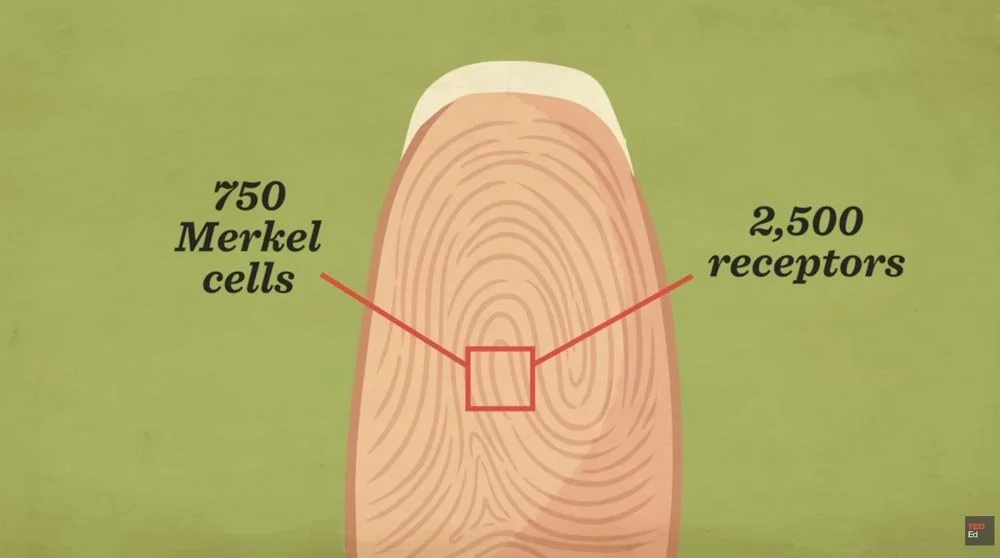
In your fingertips alone, there are 750 Merkel cells per each square-centimeter of skin, coupled with over 2,500 receptors that give you your sense of touch.
DEFINITION
Receptor (n.): A specialized cell or nerve ending that responds to sensory stimuli like touch, temperature, or pain.
A Protective Barrier
This surface is also the body’s first major line of defense. Without it, you’d be a soggy mass of tissue and fluids, fatally exposed to the elements.
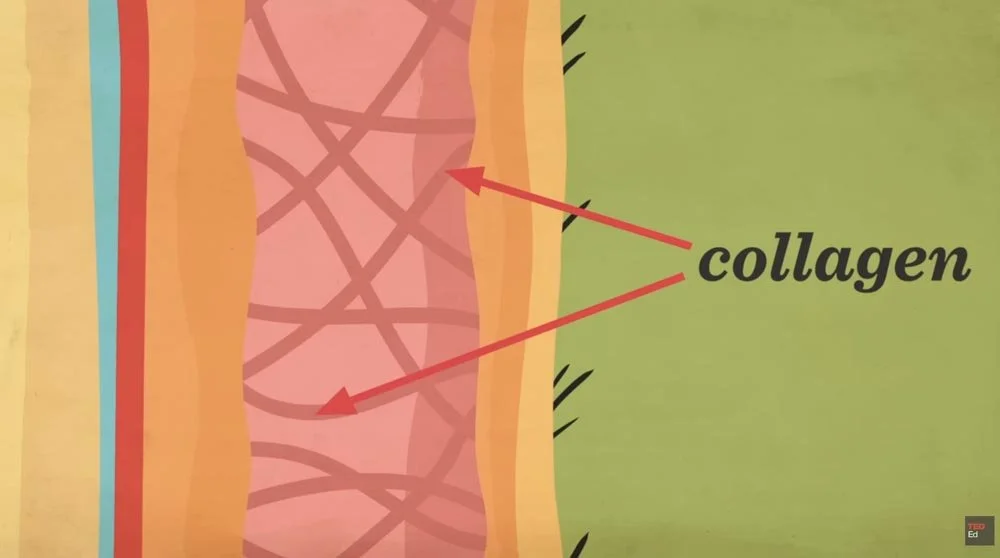
Skin effectively seals off your insides and absorbs pressure and shock with flexible collagen that makes up most of its dermal layer.
DEFINITION
Tissue (n.): A group of similar cells that work together to perform a specific function in a body.
Collagen (n.): A strong, flexible protein that helps form and support tissues like skin, bone, and cartilage.
Keratinocytes
The epidermis is made up mainly of skin cells called ker-a-tin-o-cytes that are completely replaced every four weeks.
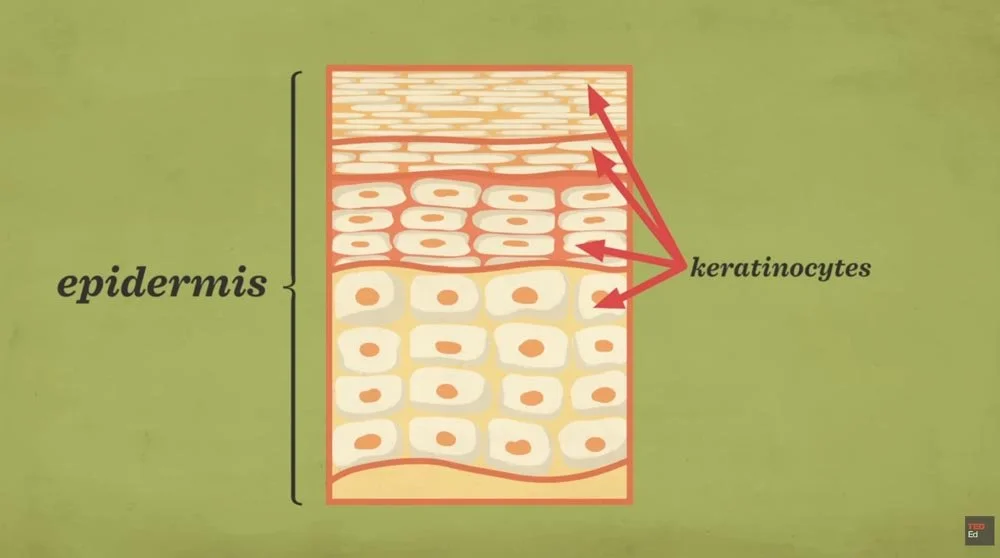
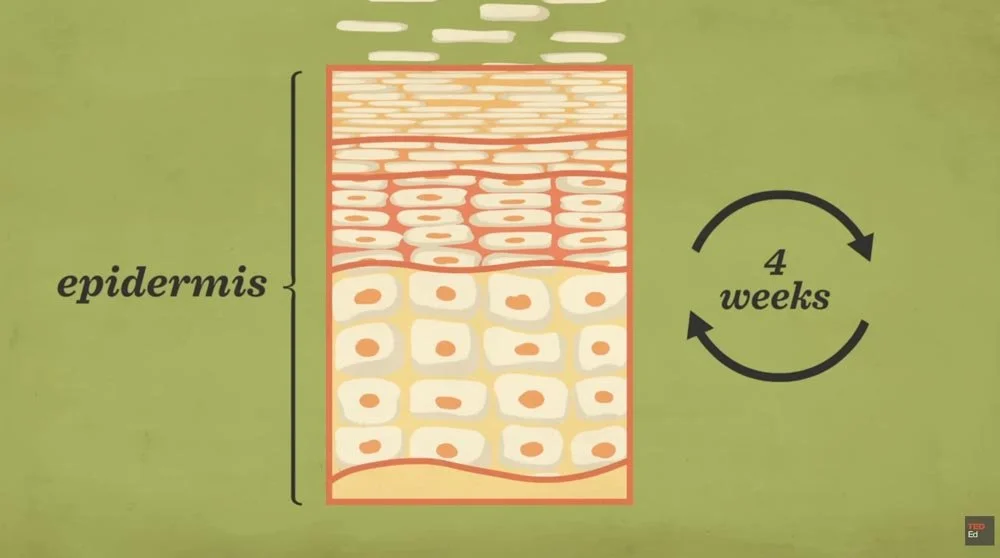
As new cells form at the base of the epidermis, older ones are pushed up.
When these cells move upwards, they’re filled with a hardened protein called keratin.
DEFINITION
Keratin (n.): A tough protein that forms hair, nails, and the outer protective layer of skin.
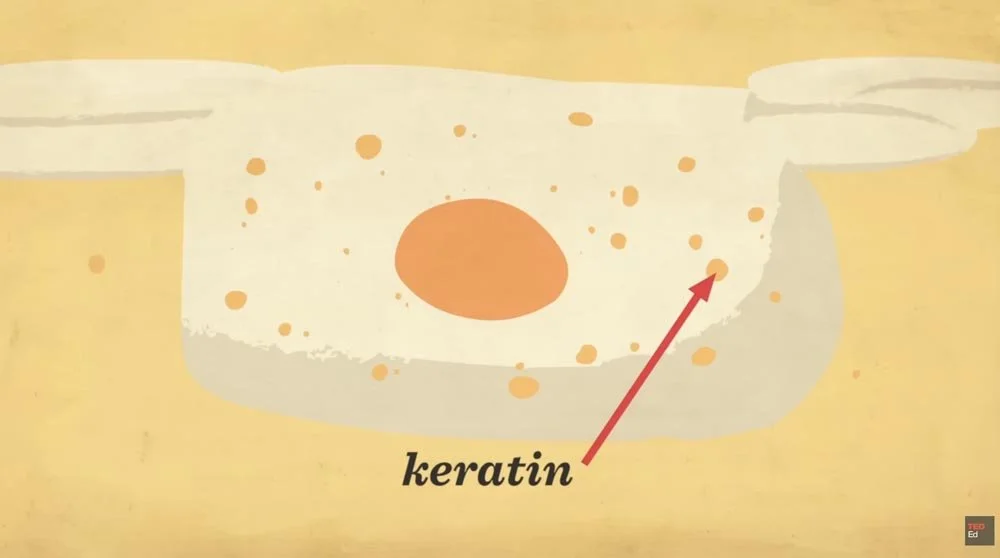
Once they reach the surface, they form a tightly overlapping, waterproof layer that’s difficult for invading microbes to breach.
DEFINITION
Microbe (n.): A microscopic organism, such as a bacterium or fungus, that is too small to be seen without a microscope.

Langerhans Cells & Skin Microbes
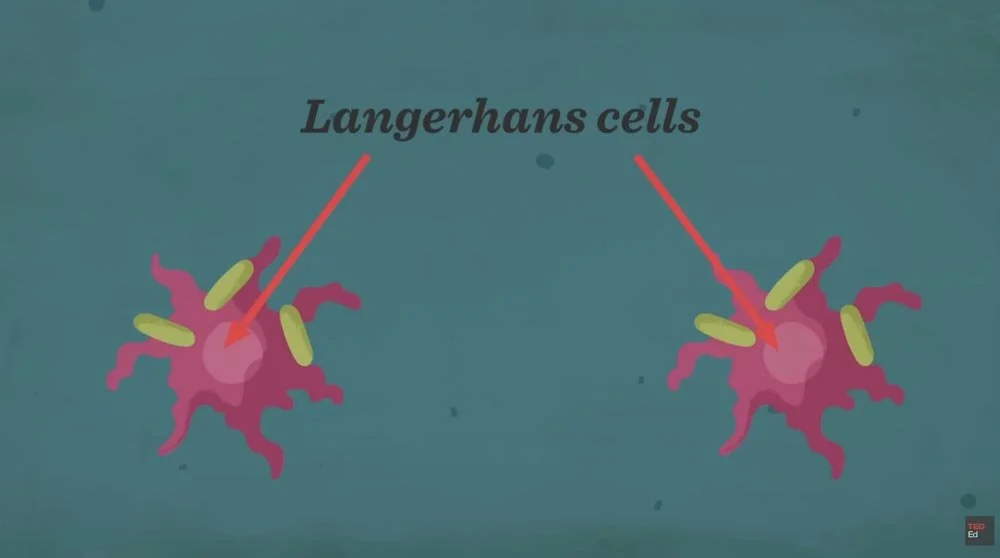
Any harmful microbes that make it into the epidermis will encounter Langerhans cells.
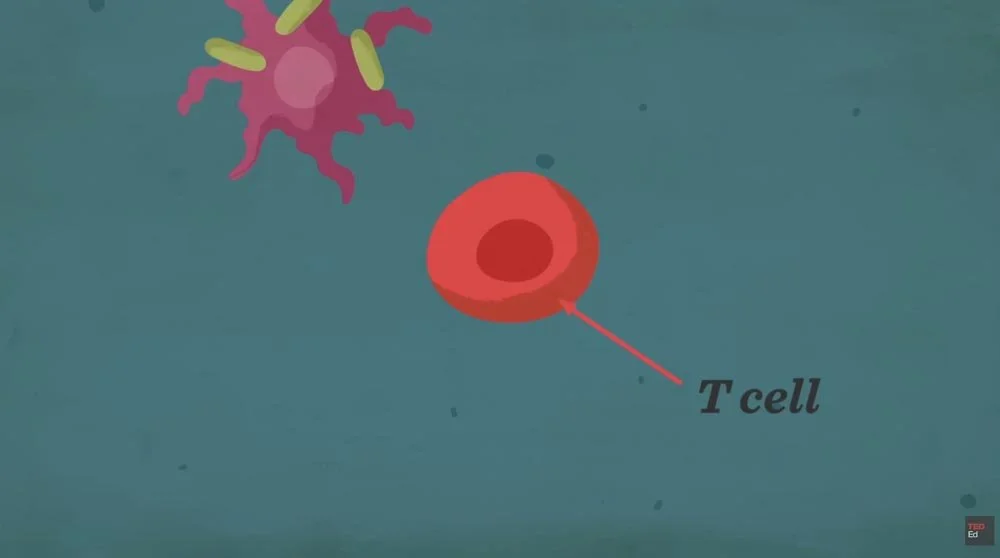
This group of protective skin cells detects invaders and communicates their presence to resident immune system T-cells, which react by launching an immune response.



A crucial feature of this immune defense is the several thousand species of microorganisms that inhabit the planes, folds, and crevices of your skin.
DEFINITION
Microorganism (n.): Any tiny living thing that can only be seen using a microscope.
Crevice (n.): A narrow opening or crack in a surface.
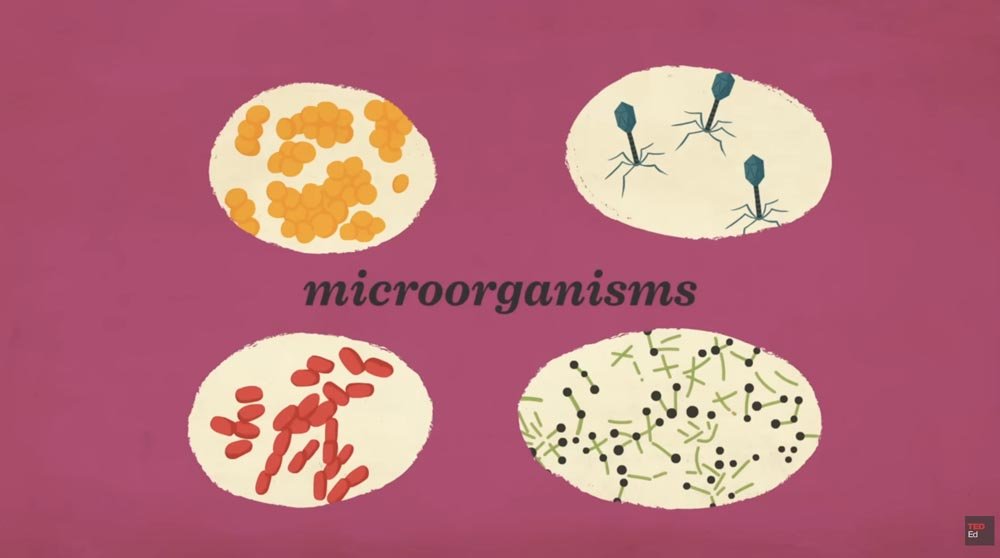
These microbes, which include bacteria and fungi, thrive in the sebum, an oily substance that’s secreted onto the skin’s surface by sebaceous glands nestled inside the dermis.
DEFINITION
Sebum (n.): An oily or waxy substance produced by glands in the skin to help keep it moisturized and protected.
Sebaceous (adj.): Relating to oil or fat; specifically, glands in the skin that secrete an oily substance.

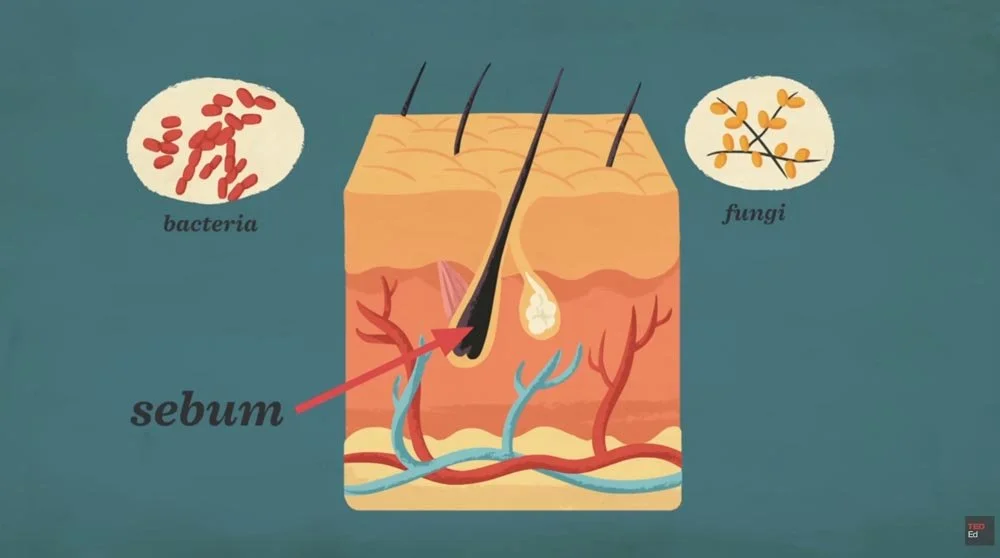
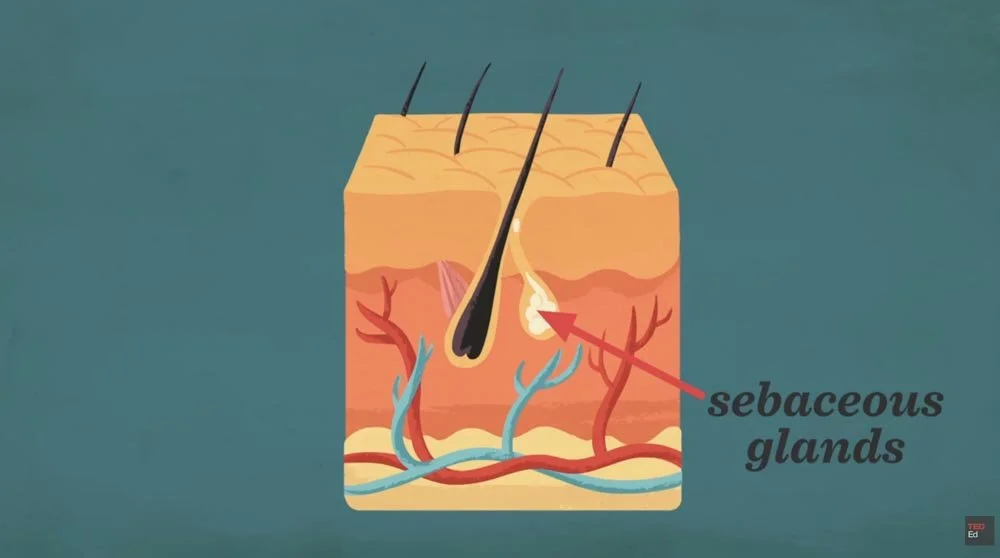
These skin microbes keep the immune system in a state of constant surveillance, ensuring that it’s ready to react if the body really is at risk.
DEFINITION
Surveillance (n.): Close observation or watching over something, especially to maintain safety or control.

Temperature Regulation & Sensation
Beyond this protective role, your skin is also a sensory organ that helps regulate your body’s temperature, two roles that are closely interlinked.
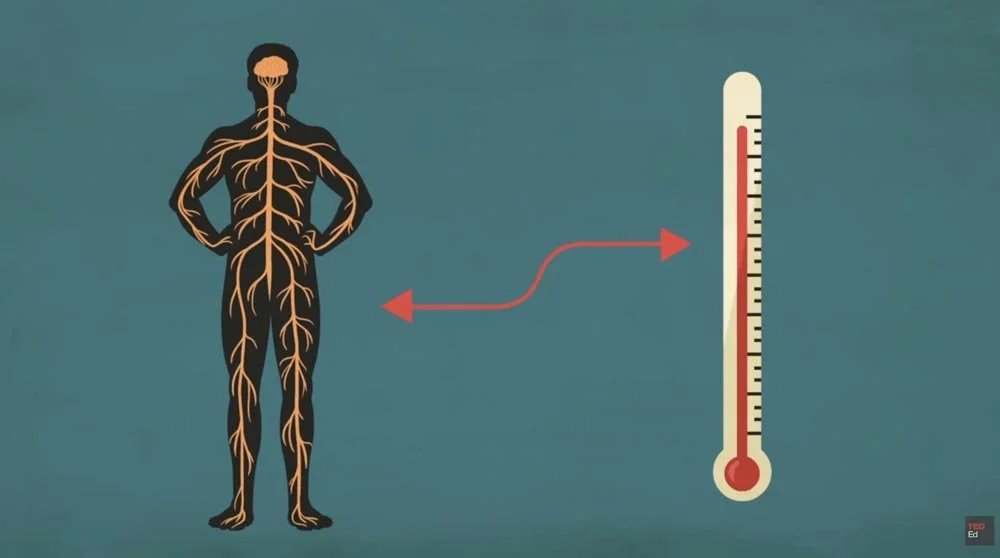
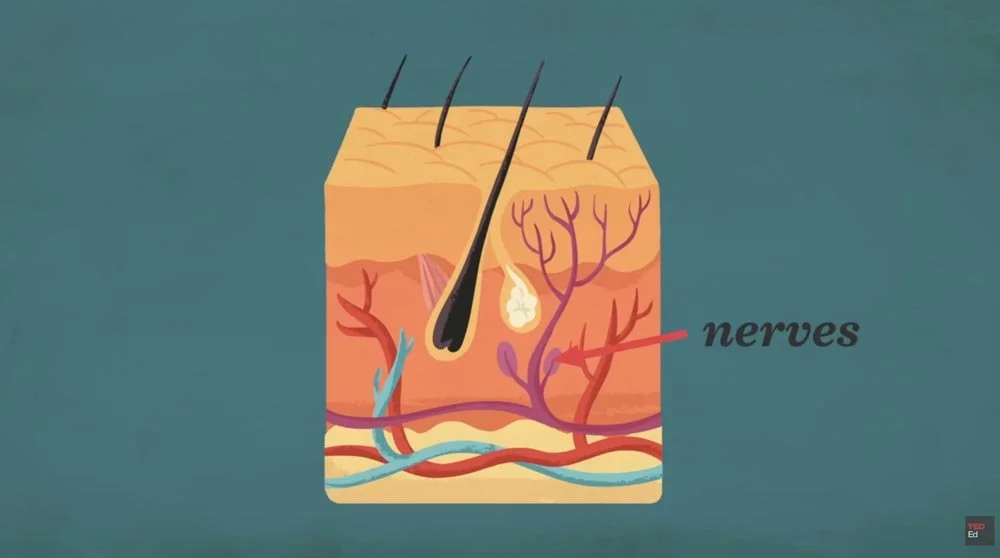
Nerves detect whether your skin is warm or cold and communicate that information to your brain.
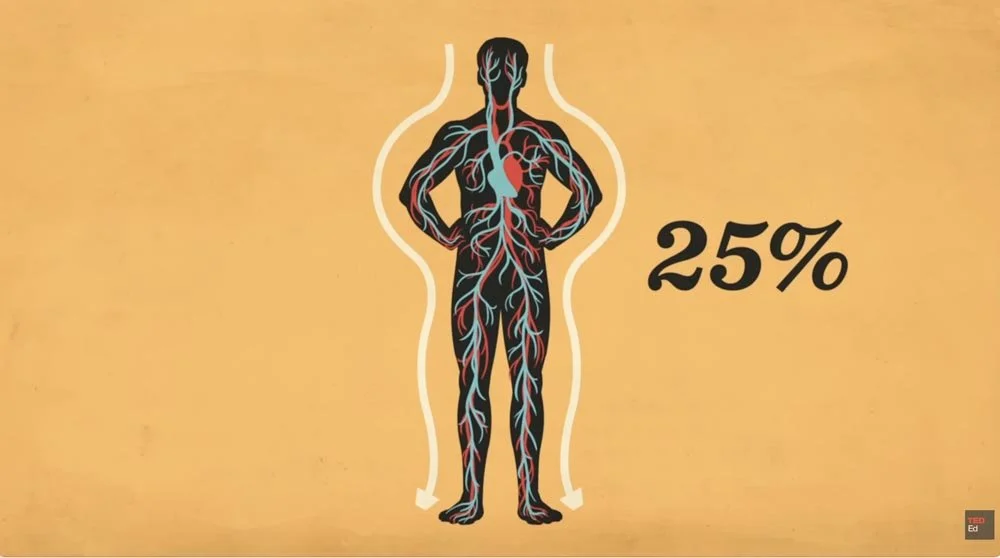
In return, the brain instructs localized blood vessels to either expand if the body is too warm, releasing heat from the blood through the skin, or to constrict if the body is cold, which retains heat.
DEFINITION
Constrict (v.): To make narrower or smaller by squeezing or tightening.
At any given time, up to 25% of the body's blood is circulating through the dermis, making this process extremely efficient.
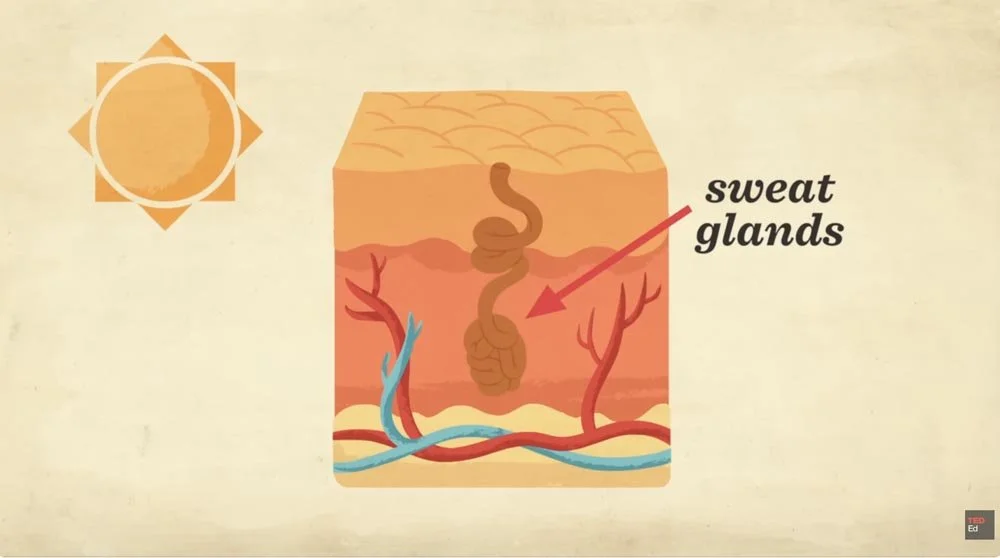
Under warm conditions, the skin’s sweat glands will secrete sweat via ducts onto the surface, transferring heat out of the body.
Hair
Hair can also be stimulated to conserve or release body warmth.
The average human has 5 million hair follicles embedded everywhere on the body except the palms of your hands and soles of your feet.
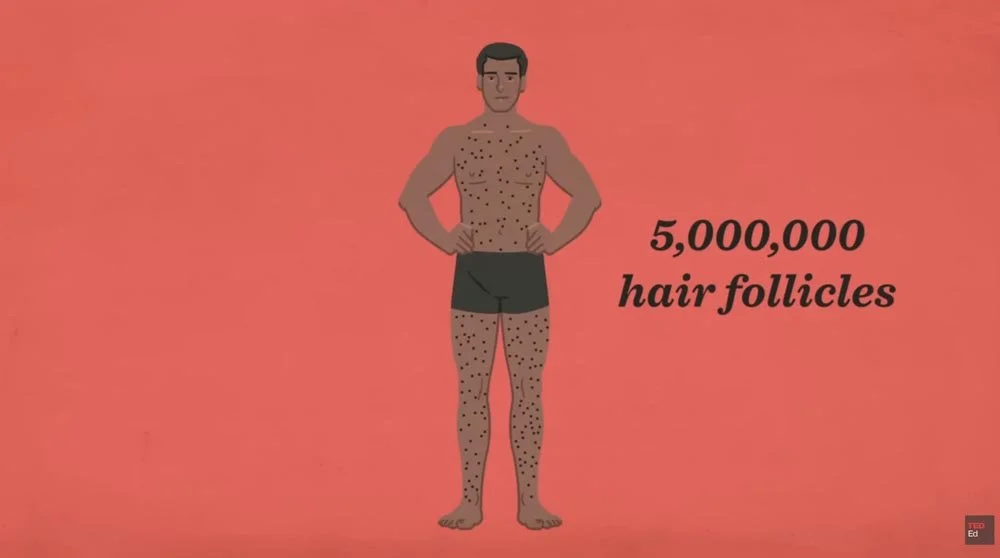
90,000 to 150,000 of those are on your scalp, where they help shield the large surface area of your head from physical damage and sunburn.
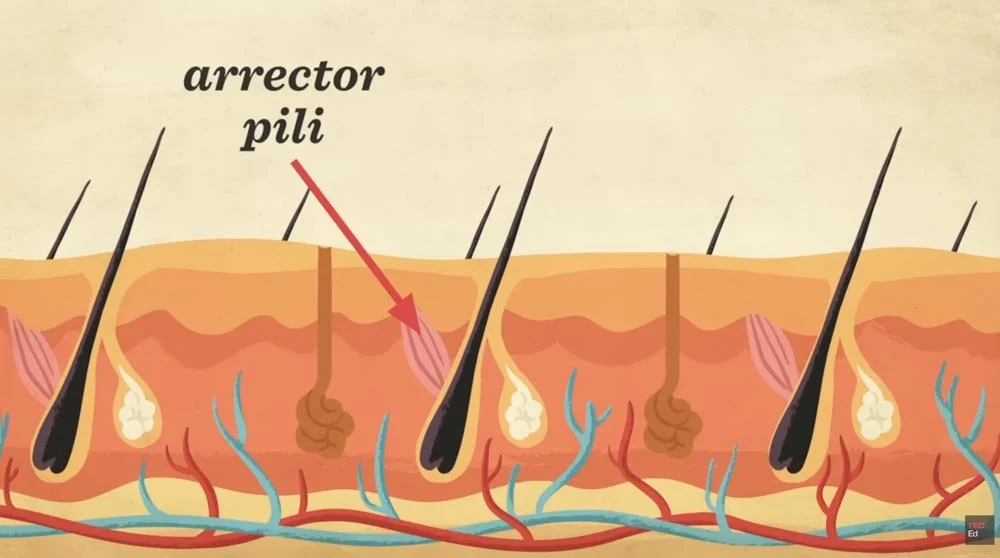
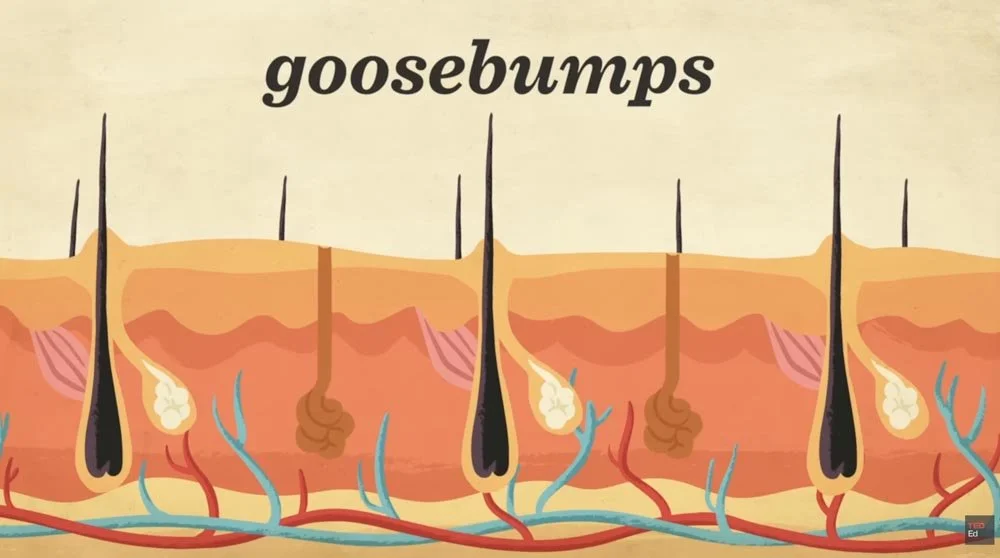
When you're cold, tiny muscles called arrector pili cause hair to stand upright across the body.
That’s the phenomenon known as goosebumps and it traps body heat close to your skin.
The skin’s vast surface isn’t just a shield; it also enables us to interact and connect with the world. Its multifunctional layer cools us down and keeps us warm.
The integumentary system may be many things, but it’s certainly more than skin deep.


► WATCH VIDEO
— about 5 minutes

► COMPREHENSION QUESTIONS
— please answer with complete sentences
What percentage of your body weight does skin make up?
What is the integumentary system?
What are the three layers of the skin?
What are the three functions of the integumentary system?
What are Merkel cells?
What is collagen?
How often are keratinocytes replaced?
As cells move towards the outside of your body, what are they filled with?
What will a harmful microbe encounter if it makes it through the epidermis and into your body?
How many hair follicles does the average human being have?
ABCD (10 points)
Write a new question based on the “Science of Skin” text or the video.
Answer it.
Dr. Kirtland Peterson Cat Peterson Dr. Cat