
AMERICAN REVoLUTION:
OVERVIEW


• Read •
AMERICAN REVoLUTION:
OVERVIEW
The Rumble in the Colonies
Before the United States was a country, it was a collection of 13 British colonies settled between 1607 and 1732.
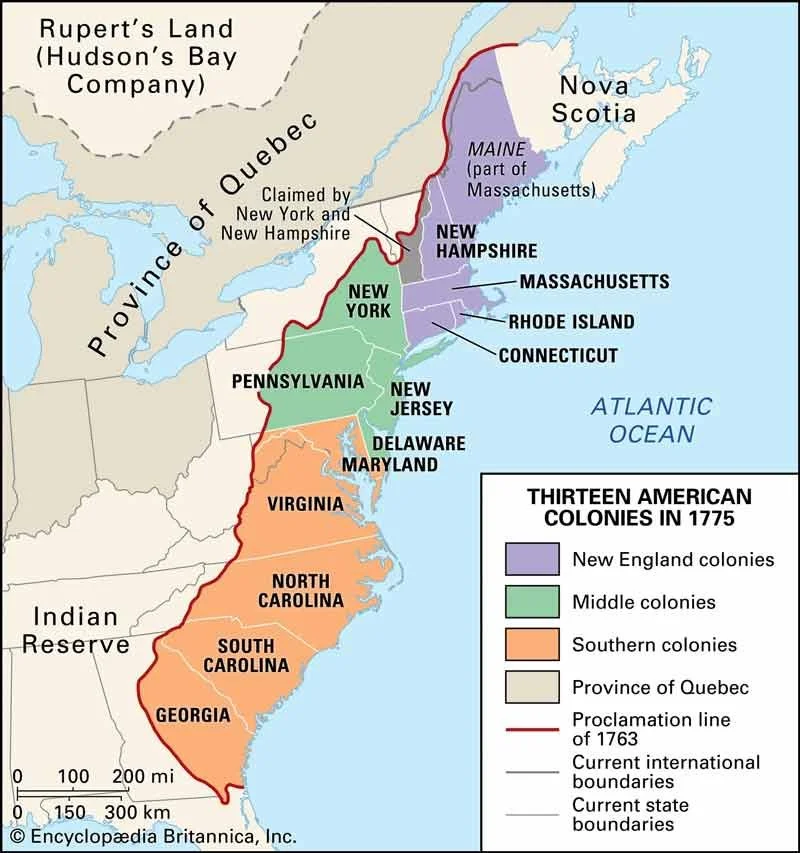
These colonies were like children of a distant motherland, Great Britain, and for a long time, they were quite happy. However, like many family arguments, the trouble began with money.
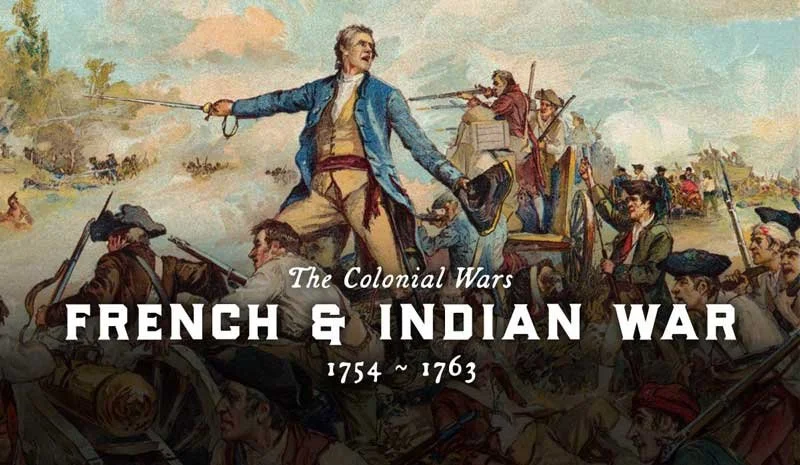
In 1763, the British finished fighting the Seven Years War, which was also known as the French and Indian War. This was a massive, explosive conflict where the British fought the French for control of North America. The British won and succeeded in booting the French out of most of the continent, but the victory came with a huge price tag.
King George III and the Parliament in London decided that since they had spent so much money protecting the colonies, the colonists should help pay for their own defense.
To get this money, Britain began issuing various taxes on things the colonists used every day, such as the Sugar Act, the Stamp Act, and later the Townshend Acts.
The Stamp Act was particularly annoying because it taxed legal documents, newspapers, and even playing cards. The colonists viewed these taxes as completely unfair because they had no say in the British government.
Tensions Boil Over
The colonists were not the type to stay quiet. They got upset and decided to boycott English goods, refusing to buy them to hurt British businesses.
Some merchants even began smuggling goods to avoid paying the taxes entirely.
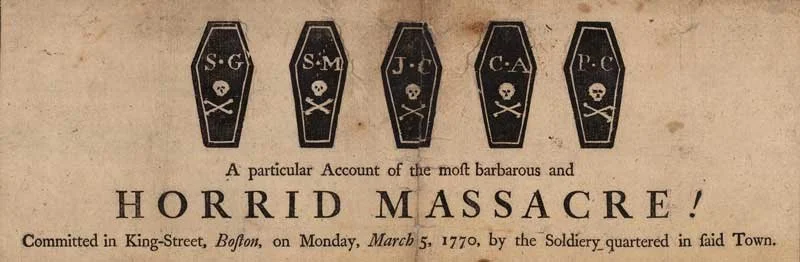
The British reacted by sending troops to occupy Boston, which only made things worse. In March 1770, a violent confrontation broke out between a crowd of colonists and British soldiers.
The soldiers fired into the crowd, killing five people. The angry radicals called this event the Boston Massacre, while the British simply called it the incident on King Street.
The colonists did not back down, and they staged more protests.
In 1773, in a famous act of rebellion, some rebels boarded three British ships in Boston Harbor. They disguised themselves as Indians to hide their identities and threw the entire cargo of tea overboard into the ocean. This event became known as the Boston Tea Party.
The tea was worth a lot of money, and King George III was furious. He responded by imposing harsh regulations that the colonists called the "Intolerable Acts," which included closing the port of Boston and forcing colonists to house British troops in their own towns.
The Shot Heard Round the World
The colonies knew they had to work together.
Leaders from 12 colonies met in secret at the First Continental Convention, also known as the First Continental Congress, to urge the American people to fight for their rights. The situation in Boston was declared an open rebellion, and Parliament ordered troops to disarm the rebels.
The fighting began almost without warning on April 19, 1775.
Paul Revere made his famous ride to let the people of Lexington and Concord, Massachusetts, know that the British were planning to attack. Thousands of volunteers, known as "Minute Men" because they could be ready to fight in a minute, rushed to the scene.
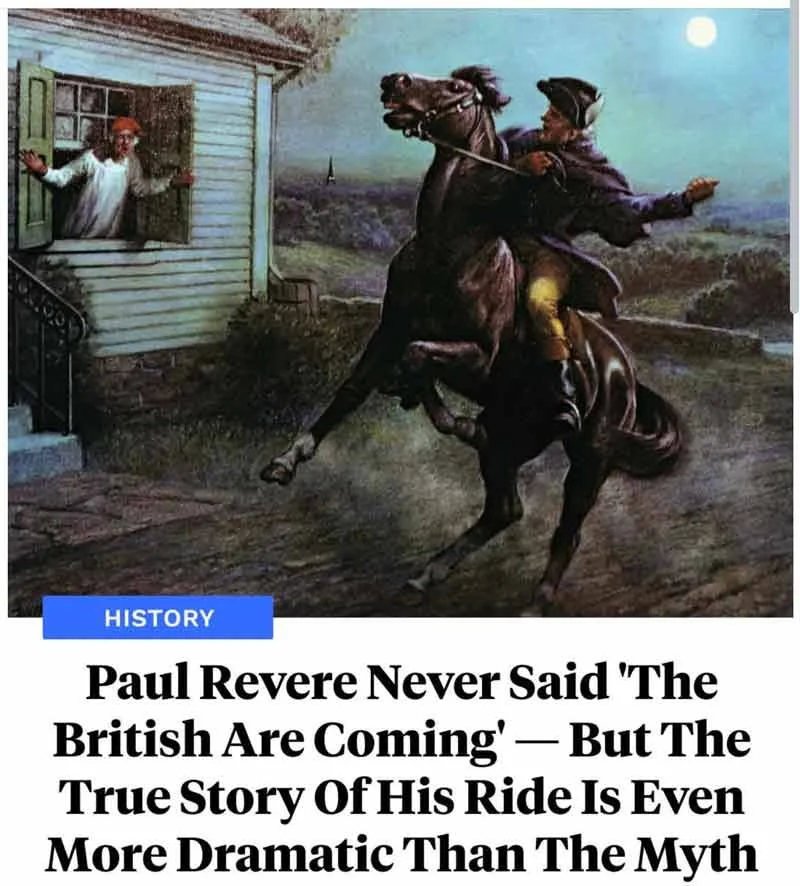
The first shots of the Revolutionary War were fired at Lexington and Concord, an event that became known as "the shot heard round the world".
Even after the shooting started, the colonies tried to sue for peace and reconciliation with the motherland, hoping to fix the relationship. But it was too late.
When the Second Continental Congress convened a year later, the 13 American colonies officially declared their desire to separate from Great Britain.
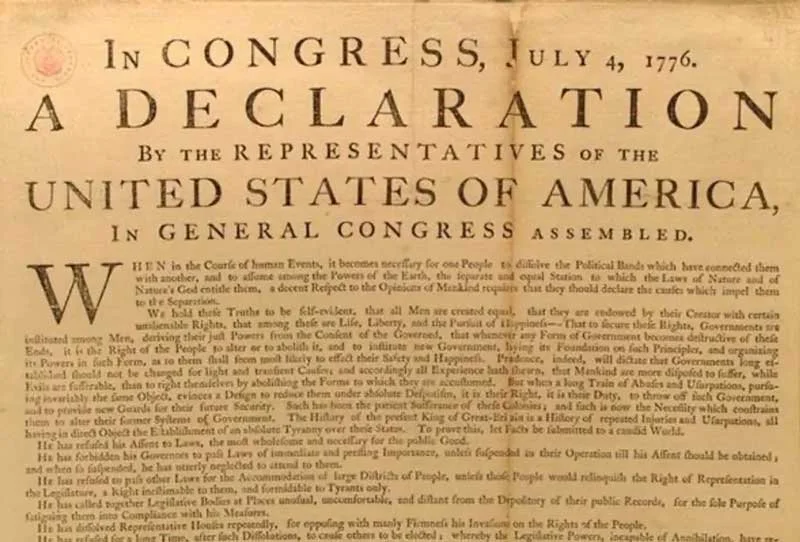
The Declaration of Independence was written by Thomas Jefferson and signed on July 4, 1776. This famous document officially declared America’s independence.
David vs. Goliath
Declaring independence was one thing, but winning it was another.
The odds were not in the colonists' favor. The British were the most powerful nation on the planet, with a well-armed and well-trained army of British regulars.
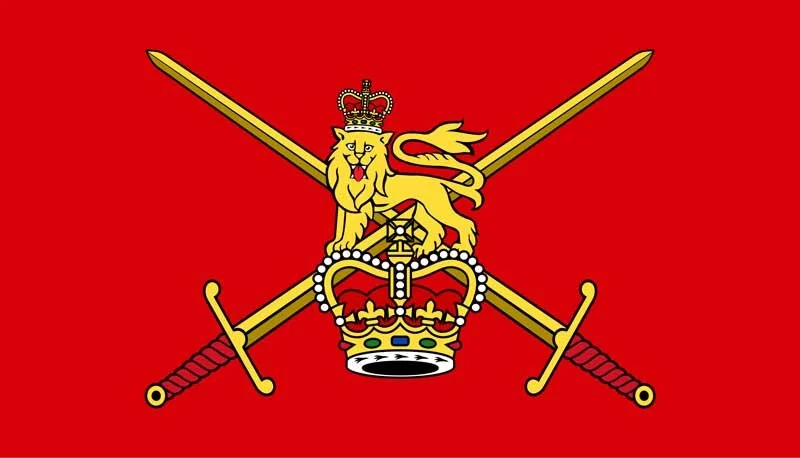
• Flag of the British Army
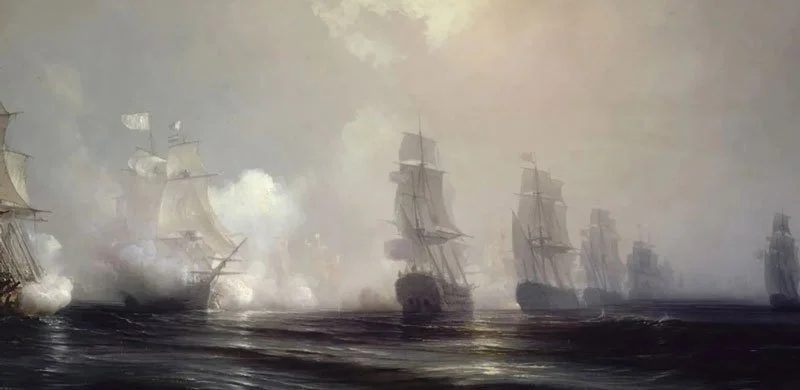
• British Navy, 1776
They even hired thousands of German mercenaries to help them fight. In contrast, the colonial forces were usually unorganized, undisciplined, and barely armed. Not to mention, the Americans had virtually no Navy at all to protect their coast.
However, the Americans did have some advantages.
They had brilliant military leaders such as George Washington and Nathanael Greene of Rhode Island.
They also had a very strong home-field advantage because they knew the land better than the invaders.
Despite this, there were many times during the eight-year war when the Americans were on the verge of complete defeat. It was often Washington's resourcefulness plus some luck that allowed them to continue to fight on.
Turning the Tide
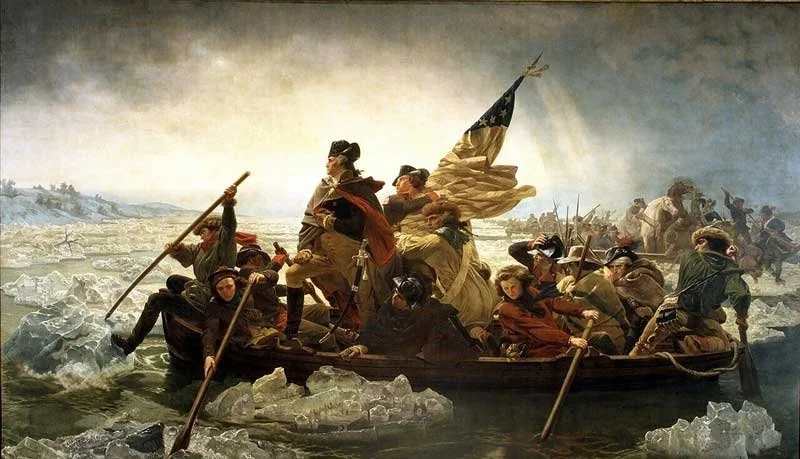
The war was long and hard. In a bold move on Christmas night in 1776, George Washington crossed the icy Delaware River to surprise a force of German troops at Trenton, achieving a massive victory that revived American hopes.
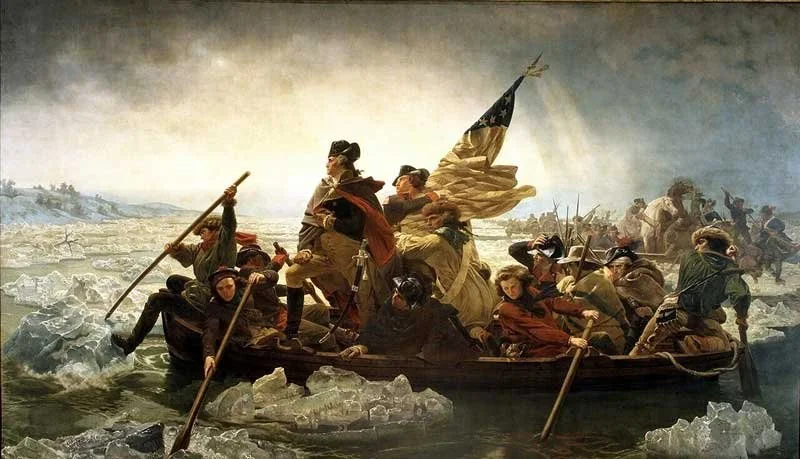
• Famous painting of Washington crossing the Delaware river.
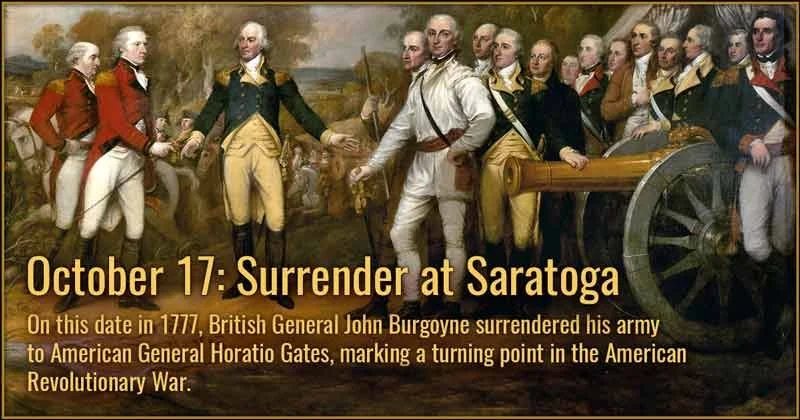
Another major turning point occurred in 1777 at the Battle of Saratoga, where the Americans forced the surrender of 6,000 British troops.
This victory was crucial because it convinced the French to join an alliance with the Americans.
The French agreed to help near the end of the war, which was critical because the French Navy could finally challenge the British ships. It is often said that the French jump in late, but their help made victory inevitable.
The war eventually moved south, where the fighting was fierce.
In 1781, a joint French and American force trapped a large British army under General Cornwallis on the Yorktown peninsula in Virginia. The British were under siege, unable to escape by sea because the French fleet had driven off the British rescue ships. Cornwallis was forced to surrender, effectively ending the major fighting.
Building a New Nation
The war officially ended with the Treaty of Paris in 1783, where Great Britain officially recognized the independent nation of the United States of America.
Following the victory, the new states operated under a government framework called the Articles of Confederation for four years. However, they soon realized they needed a stronger central government to survive.
In 1787, a Constitutional Convention took place in Philadelphia.
Through lots of argument and hard-fought compromise, the delegates arrived at a final Constitution 11 years after the Declaration of Independence.
This document created a system to assure that the United States would never be ruled by a king or fall into tyranny. The Constitution remains the framework of the U.S. government to this day, proving that the struggle for liberty was worth the fight.

Alliance (n.) - A formal agreement or union between nations to work together for a common goal.
Boycott (v.) - To refuse to buy or use goods or services as a form of protest.
Compromise (n.) - An agreement reached where each side gives up something they wanted.
Confederation (n.) - A loose union or group of states with some shared power but mostly independent laws.
Confrontation (n.) - A hostile or argumentative meeting or situation between opposing parties.
Constitution (n.) - The set of basic laws and principles that determine the powers and duties of a government.
Convention (n.) - A large formal meeting of people who share a common interest or goal.
Inevitable (adj.) - Certain to happen; unavoidable.
Mercenaries (n.) - Professional soldiers hired to serve in a foreign army.
Militia (n.) - A military force that is raised from the civil population to supplement a regular army in an emergency.
Parliament (n.) - The group of people responsible for making the laws in Great Britain.
Ratifies (v.) - To sign or give formal consent to a treaty, contract, or agreement, making it officially valid.
Reconciliation (n.) - The restoration of friendly relations; making up after a fight.
Repealed (v.) - To revoke, cancel, or annul a law or congressional act.
Resourcefulness (n.) - The ability to find quick and clever ways to overcome difficulties.
Siege (n.) - A military operation in which enemy forces surround a town or building, cutting off essential supplies.
Smuggling (n.) - The illegal movement of goods into or out of a country to avoid taxes.
Strategy (n.) - A plan of action or policy designed to achieve a major or overall aim.
Traitors (n.) - People who betray their friends, country, or principles.
Tyranny (n.) - Cruel and oppressive government or rule.

► COMPREHENSION QUESTIONS
— please answer with complete sentences
List the thirteen American colonies.
What are the two names of the war that ended in 1763?
Why did King George III want to tax the American colonies?
Describe the Boston Massacre.
What was the First Continental Convention (also know as the First Continental Congress)?
Who wrote the Declaration of Independence—and when?
Explain how the American Revolution was a “David vs. Goliath” war?
Hint: David was small and weak, Goliath was huge and strong—yet David won.
What important event took place on Christmas night in 1776?
After the Battle of Saratoga in 1777, who joined the American rebels in their fight against the British?
What treaty marked the end of the American Revolution?
What year was that treaty signed in?
A+ BONUS: Watch the two short videos below.
Write about two things you learned that you have not already written about in your answers to the questions above.