
CHATTEL SLAVERY 2
THE ATLANTIC SLAVE TRADE



• READ •
CHATTEL SLAVERY 2:
THE ATLANTIC SLAVE TRADE
What Was the Atlantic Slave Trade?
Slavery means treating people as property and taking away their freedom and rights.
It has existed in many parts of the world, but one kind of slavery was especially large and cruel—the Atlantic slave trade.
This trade took place from the late 1400s to the mid-1800s.
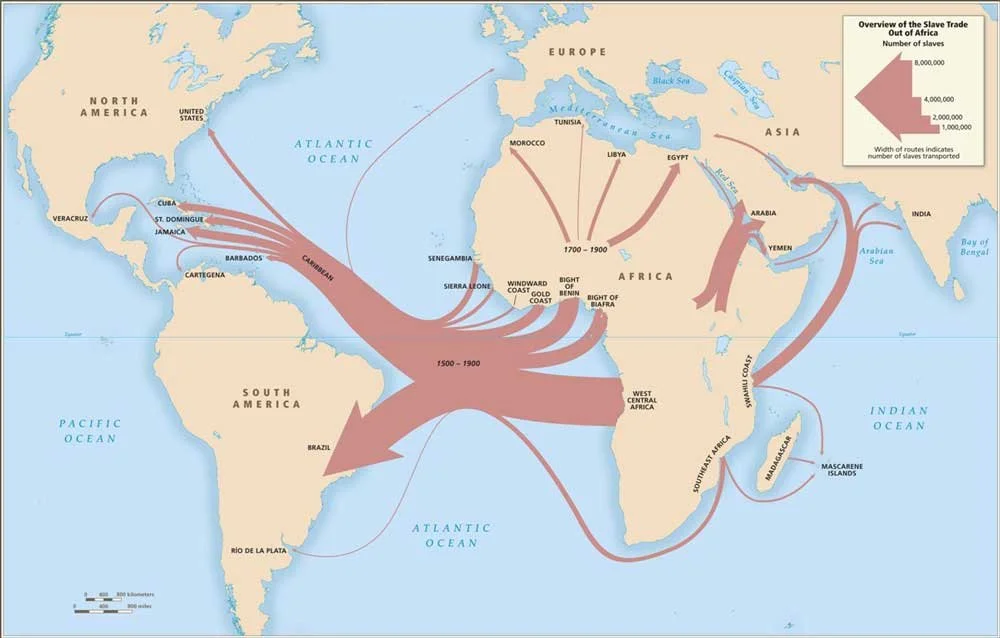
It connected Africa, Europe, and the Americas, and it forced more than ten million African people across the ocean to work as slaves in the Americas.
The effects of this terrible system changed the histories, economies, and families of people all over the world.

How It Began
Europe and Africa had traded with each other for hundreds of years through the Mediterranean Sea.
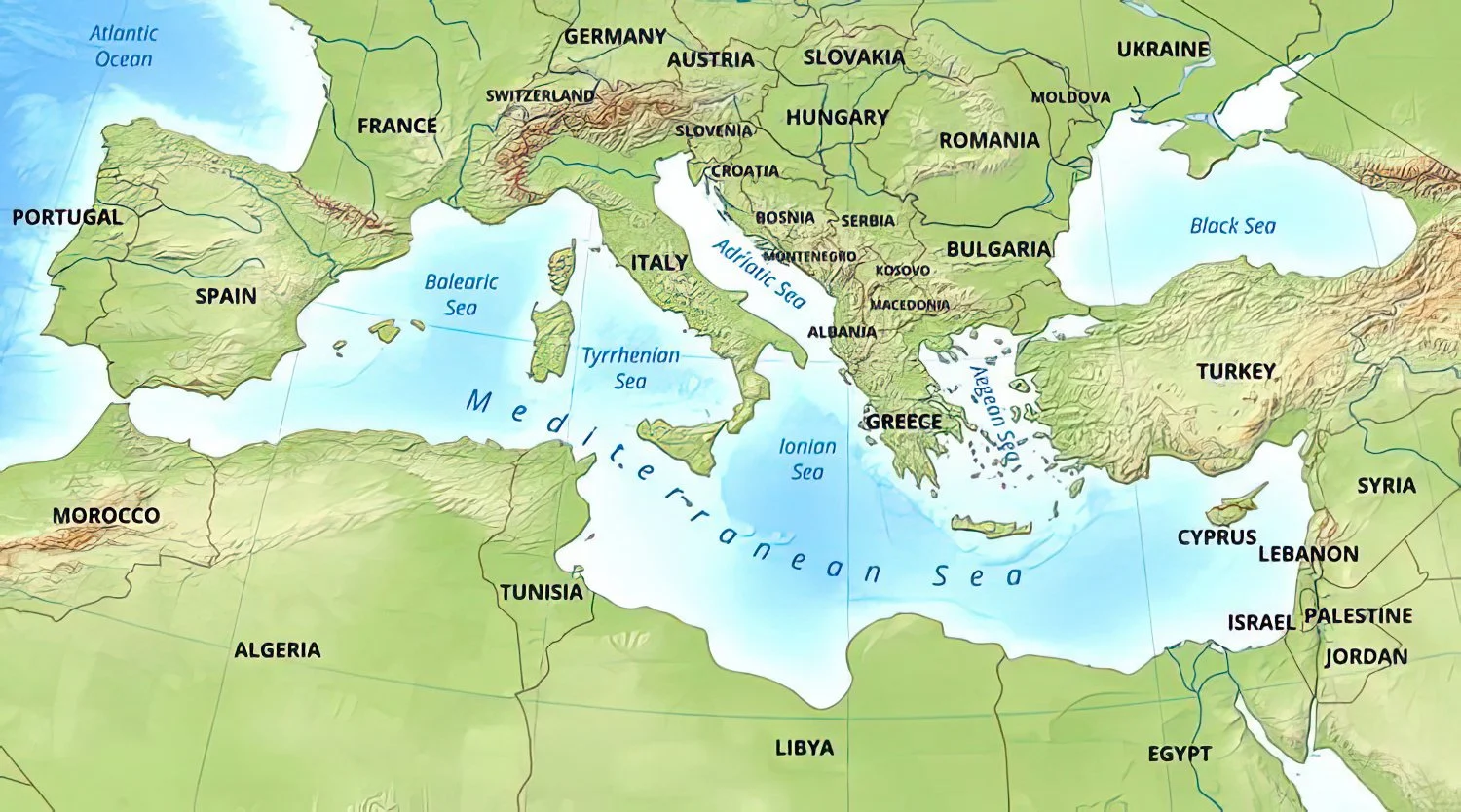
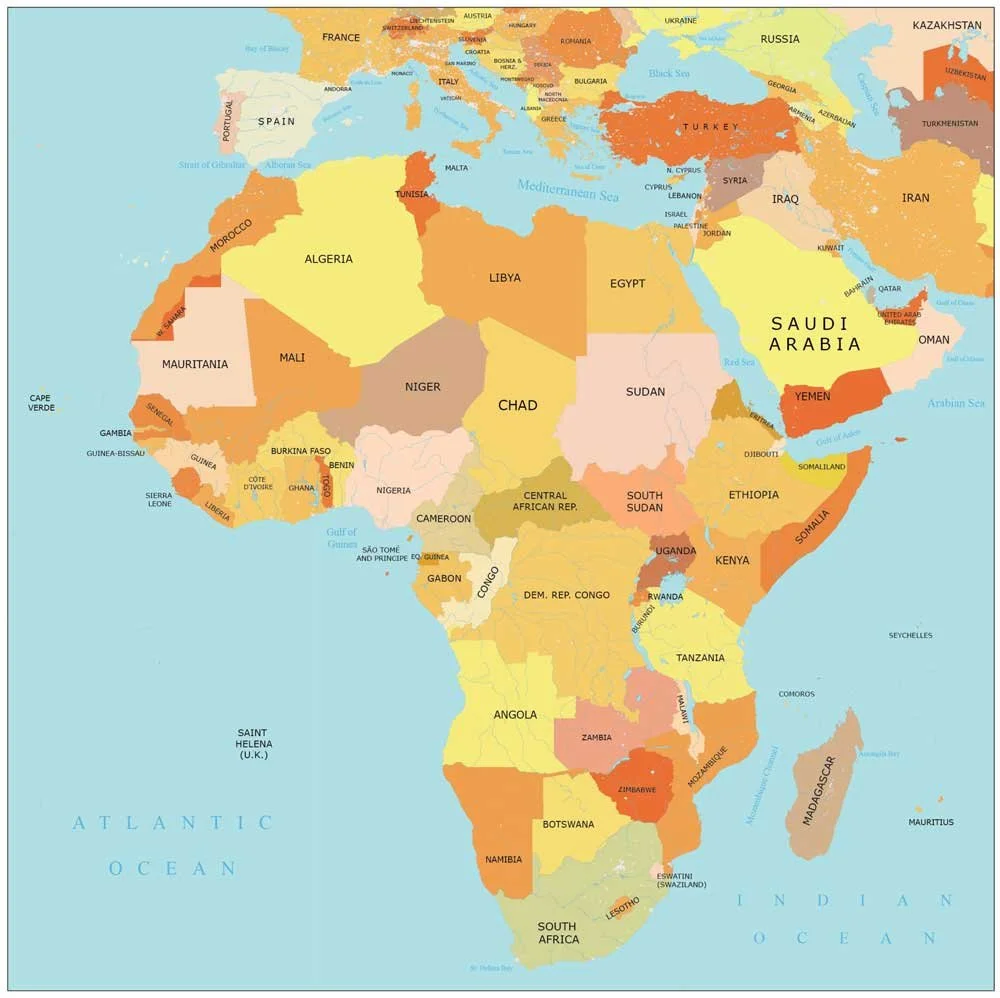
But in the late 1400s, the Portuguese started building colonies along Africa’s west coast. Soon after, the Spanish began to settle in the Americas.

Colonize (v.) – To take control of another land and settle there.


The flags of Spain and Portugal
In the new colonies, crops like sugarcane, tobacco, and cotton needed huge amounts of hard labor. There were not enough European settlers or workers to grow these crops.
Native American people were forced to work, but many died from new diseases brought by Europeans, and others fought back.
So the Europeans began to look to Africa for labor.
Slavery in Africa Before Europeans Arrived
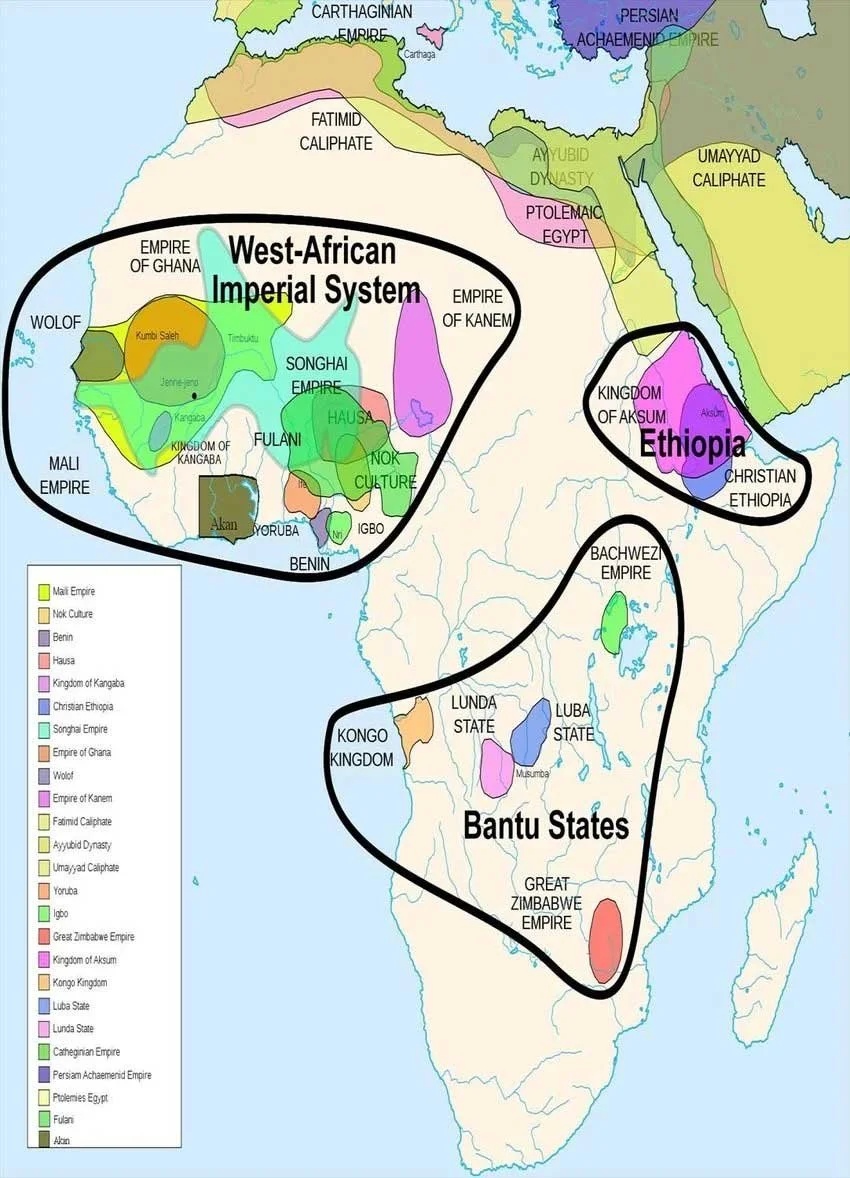
Slavery already existed in Africa, but it was very different from what it would become.
Some slaves were indentured servants who worked for a certain number of years and could later gain their freedom.
Indentured servant – A person who works for someone for a set number of years to pay off a debt or earn freedom.
Others were like serfs in Europe, working on land owned by others.
Serf (n.) — a person in earlier times who was like a slave. Serfs had to stay on the property where they worked and lived. If the land was sold, they were sold along with it.
In some African societies, slaves could own property, marry freely, and even rise to important positions.
When European traders arrived offering manufactured goods, guns, and rum in exchange for slaves, some African rulers and merchants agreed to trade.
They often sold people who were criminals, debtors, or prisoners of war from rival tribes.
Debtor (n.) — a person who owes a debt to another. When you get a loan from a bank, you become the bank's debtor.
These rulers did not think of the people they sold as “fellow Africans.”
Selling slaves made their kingdoms richer and stronger against enemies.
The Trade Grows & Spreads
At first, the trade seemed to benefit African kingdoms that took part in it.
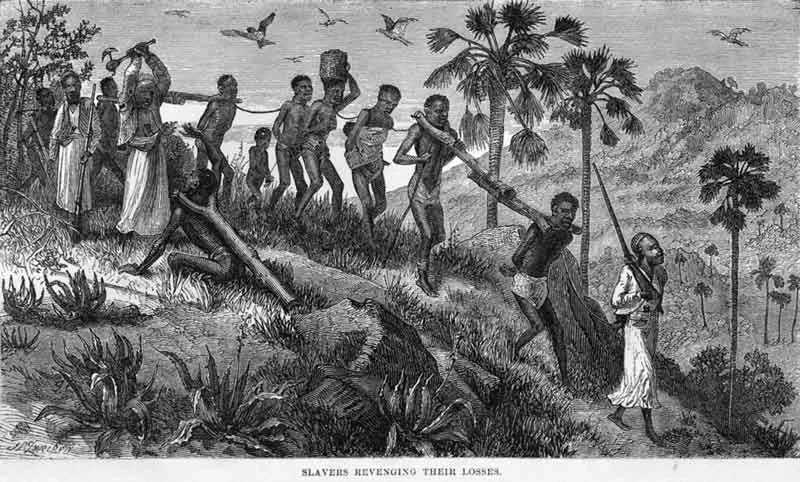
But soon, the huge European demand for slaves caused terrible competition. Some kingdoms began to start wars just to capture more slaves.
In many places, being sold into slavery replaced other punishments for crime.
As slave raids increased, kingdoms tried to protect themselves by buying European weapons, which they could only get by selling more slaves.
This created an endless cycle—an “arms race”—that brought more violence and fear across West Africa.
The Middle Passage
For the people taken as slaves, the journey across the Atlantic Ocean—called the Middle Passage—was one of the most horrible experiences in history.
Middle Passage – The long, dangerous sea journey that brought enslaved Africans to the Americas.
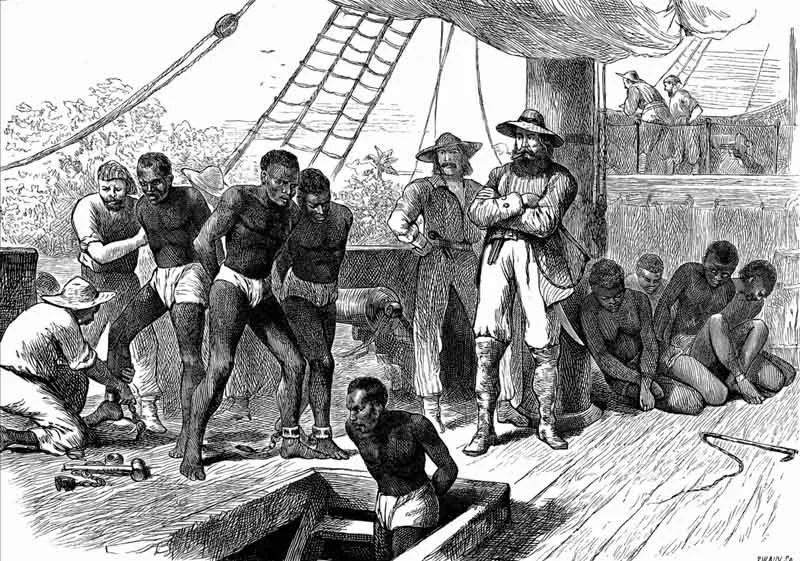
Captured Africans were marched for miles to the coast, often chained together. At the slave forts, they were shaved to prevent lice and branded with hot irons.
Branding – Burning a mark onto someone’s skin to show ownership or control.
Then they were forced onto crowded ships heading to the Americas.
About one in five died on the voyage and never reached land.
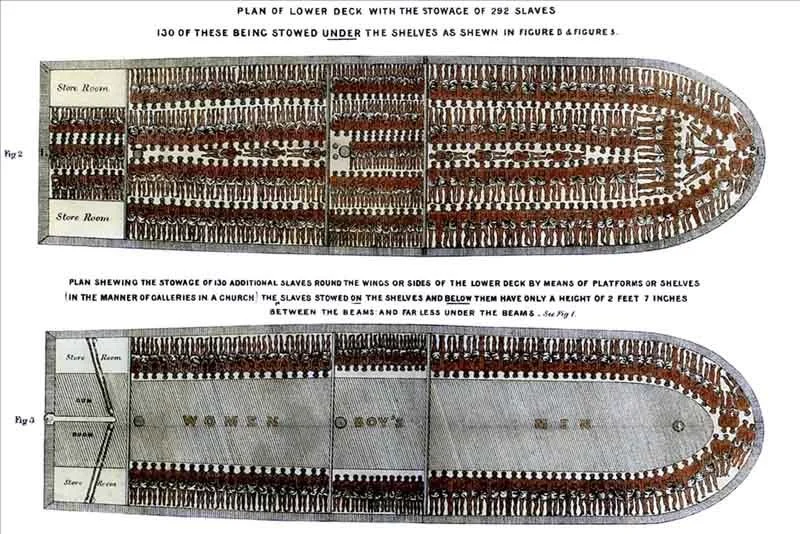
Ship captains often packed hundreds of people tightly below deck to carry as many as possible.
There was little air, light, or food, and diseases spread quickly.
Sick people were sometimes thrown overboard. Some captains even cut off a slave’s ear to prove they had purchased them.
Many Africans had never seen white people before and believed they were cannibals who would eat them.
Some refused to eat or jumped overboard, choosing death rather than slavery. Those who survived were treated as cargo, not as human beings.
Cargo (n.) – Goods or items carried on a ship; in this case, enslaved people were cruelly treated as cargo.
Women and children were kept on deck and often abused by the crew. Men were sometimes forced to “dance” on deck to keep their muscles strong and to prevent rebellion.
Effects on Africa & the World
The people who reached the Americas suffered terrible lives of forced labor. But the slave trade also caused deep and lasting damage to Africa itself.
Tens of millions of Africans—mostly young men—were taken away. This caused a huge loss of population and changed the balance of families and communities.
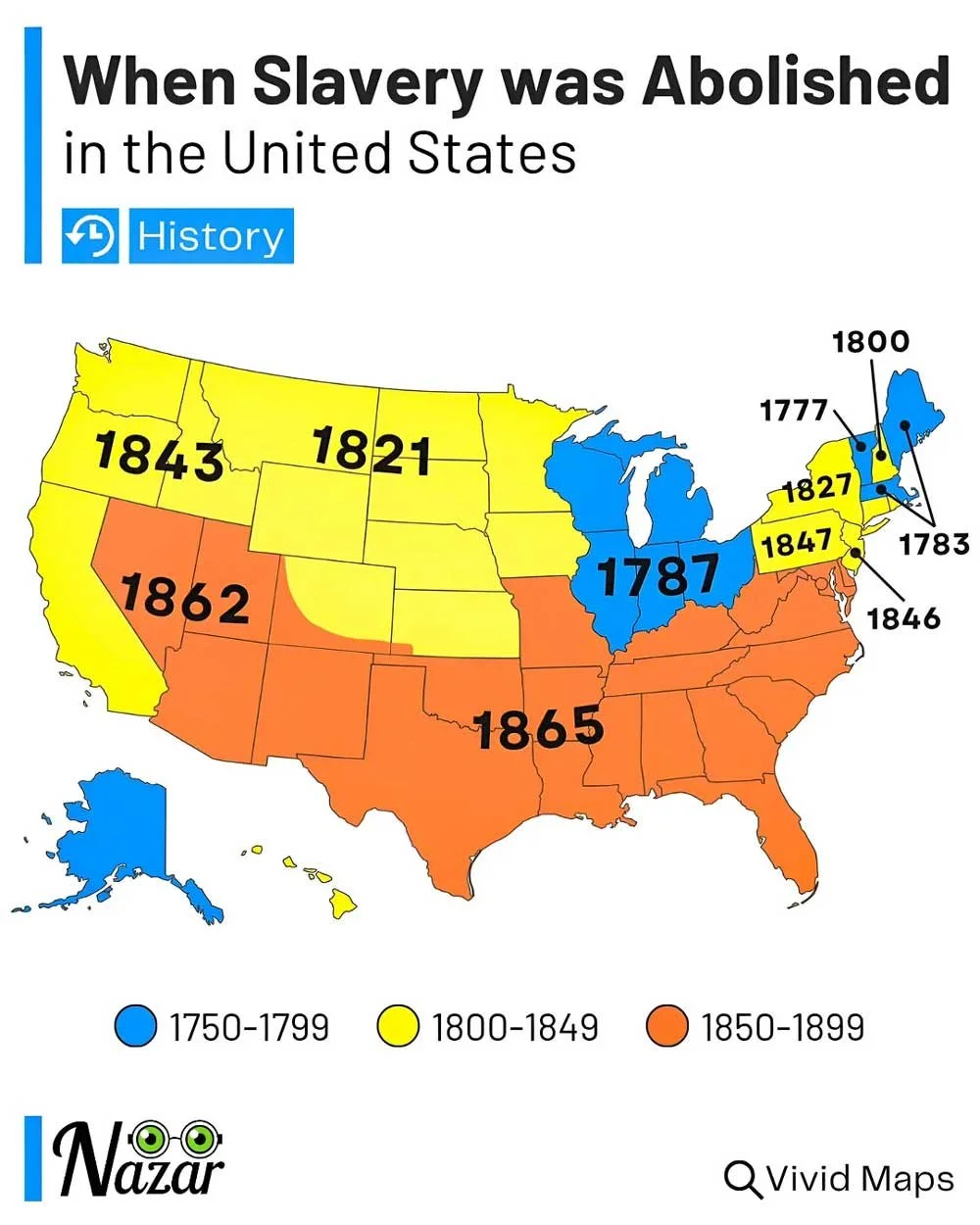
When slavery was finally outlawed in the 1800s, many African kingdoms that had depended on the trade collapsed.
Without the slave trade, their economies weakened, and European nations began to colonize Africa.
The trade also brought more war and violence, because so many European guns had been sold to African rulers.
These weapons made it easier for European countries to later take control of African lands. The conflicts and divisions created by the slave trade still affect some parts of Africa today.
The Rise of Racist Ideas
Another long-lasting result of the slave trade was the creation of racist beliefs.
Racism (n.) – The false belief that some races are better or worse than others.
In Africa, slavery had not been based on race—it was usually a result of war or punishment for crimes.
But Europeans, who believed in a religion that taught that all people were equal before God, needed an excuse for enslaving millions of other humans.
To justify their actions, they invented false ideas about race.
They claimed that Africans were naturally inferior and meant to be slaves. These beliefs were used to defend slavery and were passed down for generations.
Inferior (n) – Considered lower in quality or importance.
Because of this, slavery in Europe and the Americas became based on skin color.
Even after slavery ended, the false idea that Black people were less equal continued to shape laws, attitudes, and social systems.
The Lasting Legacy
The Atlantic slave trade was one of the largest injustices in human history.
It destroyed lives, families, and cultures. It changed Africa, Europe, and the Americas in lasting ways.
Its effects can still be seen today—in racial inequality, economic differences, and cultural memory.
Understanding what happened during the Atlantic slave trade helps us see how deeply it shaped our modern world—and why remembering it matters.
• Please watch video before answering questions •

► COMPREHENSION QUESTIONS
— please answer with complete sentences
What does slavery mean?
About how many Africans worked as enslaved persons in the Americas?
You may use numbers from this text and video or the first video we watched.
What kinds of crops needed huge amounts of labor?
What did Europeans trade for African slaves?
Hint: Europeans did not purchase slaves with money.
How did an “arms (weapons) race” begin in Africa between the African kingdoms?
What was the journey from Africa to the Americas called?
Hint: They did not cross the Pacific Ocean.
What fraction of captured Africans died on the voyage to the Americas?
When was slavery outlawed?
You may use the dates in the text or the dates in the map of when slavery ended in the United States.
Was slavery in Africa based on race?
Remember to answer this questions in a full sentence.
How did Europeans justify capturing, transporting and enslaving Africans?
ABCD: Long ago, people did not “see” race.
People were just people.
Then slavers “invented” race.
Later, slavery was abolished.
If race is invented, why do people still “see” race today?
What do you think about that?